Pure Fiction does not care how much damage you deal. It cares how many enemies you delete, how fast, and how many of them are on screen when you do it. That single difference is why the team that flattens Memory of Chaos can stall out here, and why a Serval you benched two patches ago suddenly out-scores your shiny single-target hypercarry. Get that one idea and the mode stops being confusing.
Here is the short version before the detail: you win Pure Fiction by fielding wide damage (AoE, blast, follow-up, or damage-over-time that spreads), leaning into whatever the cycle's buff rewards, and clearing waves fast enough that new enemies keep spawning into your area attacks. Two teams, two halves, one score target each. Hit it and you bank one of the largest repeatable Stellar Jade payouts in the game.
What Pure Fiction actually is
Pure Fiction is one of Honkai: Star Rail's three rotating endgame pillars, sitting alongside Memory of Chaos and Apocalyptic Shadow. Each runs on its own recurring cycle of a few weeks, and when a new cycle drops the enemy lineup, the stage buffs, and the reward chest all reset. You get two stages. You bring a separate team to each. Clearing both to the top score tier is the goal, and that top tier is worth a chunk of Stellar Jade on par with a full Memory of Chaos clear, plus Fuel, credits, and other upgrade mats. The exact Jade figure moves cycle to cycle, so the endgame rewards breakdown is the page to check for current numbers.
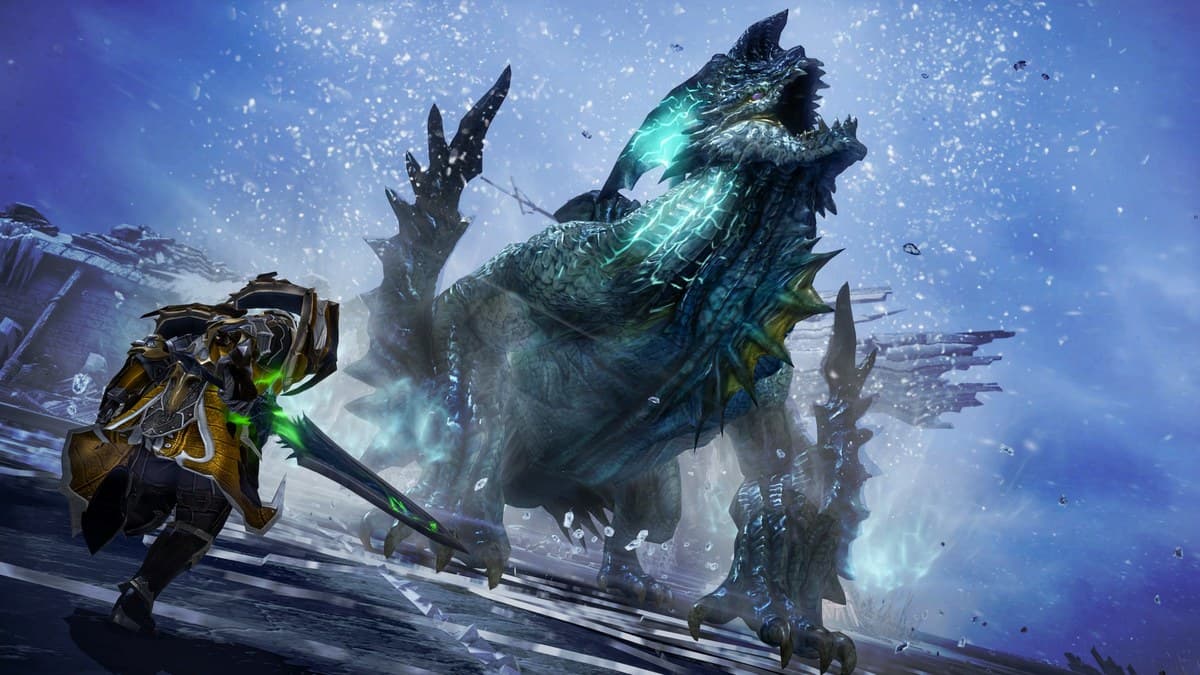
The stage itself is a series of enemy waves inside a cycle (turn) limit. You are not racing a single boss health bar. You are running a body count. Every enemy you defeat feeds a score meter, and when that meter crosses the stage's thresholds you earn stars, up to three. Three stars on both stages is a full clear.
How scoring really works
This is the part most guides gloss over, so slow down here. Points come from defeating enemies, and the score you get scales with the enemy: trash mobs are worth a little, elites more, the occasional mini-boss the most. Kill more, kill bigger, kill sooner.
Three levers move your score:
- Waves and spawns. Clearing a wave summons the next one. The faster you wipe what is in front of you, the more total enemies spawn before your cycles run out. A team that clears each wave in one action snowballs into far more spawns than a team that chips.
- The point ceiling per action. Pure Fiction favors hitting many targets at once. Wide attacks that catch a full wave convert one turn into a pile of points; a single-target nuke converts one turn into one kill. This is the whole reason AoE rules the mode.
- The cycle clock. You have a fixed number of cycles. Speed and action-advance stretch how many turns you actually get inside that clock, which is why fast, high-Speed units and advance-forward supports quietly raise your ceiling.
Put plainly: your score is roughly enemies killed times their value, and every design lever pushes you toward killing a lot of things at once, quickly. Build for that and the numbers take care of themselves.
Read the buff before you build the team
Every Pure Fiction cycle ships a set of stage buffs, and they are not flavor text. They routinely hand out things like flat damage boosts when you hit three or more enemies, energy on kill, bonus damage per enemy defeated this cycle, or amplified follow-up and damage-over-time effects. The buff is the mode telling you which archetype it wants this rotation.
Before you lock a team, open the stage, read the buff panel, and ask one question: which of my damage types does this reward? A cycle that stacks a buff per enemy killed loves rapid AoE that racks up kills early. A cycle that amplifies damage-over-time turns Kafka and Black Swan into a wildfire that spreads across the whole wave. Matching the buff is often worth more than swapping in a nominally stronger unit, because the buff can double or triple the output of the archetype it targets.
The archetypes that own the mode
Pure Fiction sorts characters by shape, not by name recognition. These are the profiles that consistently score, roughly best to merely-good:
Summon and repeated-hit carries. Units whose damage arrives as many separate instances across the field are the gold standard. Jing Yuan's Lightning-Lord, Argenti's ultimate blossoming across the wave, Rappa's sweeping Super Break hits, and The Herta's stacking area detonations all convert one setup into wave-wide clears. They are the reason so many accounts three-star with one obviously-built team and one scrappy second.
Blast and true AoE nukers. Himeko, Herta, Serval, Qingque, Jade, and similar units erase whole rows. Herta in particular was practically designed for this mode: her passive fires when enemies drop below a health threshold, and Pure Fiction floods the screen with low-health trash for her to pick off in chains.
Damage-over-time spreaders. DoT teams built around Kafka, Black Swan, and Sampo apply stacking Wind Shear, Shock, and Burn to everything on the field at once, then let it all tick. When the cycle buff amplifies DoT, this is frequently the single highest-scoring option in the game, and it barely cares about enemy weaknesses.
Break and Super Break. Firefly, Rappa, Boothill, and the Break archetype shine when the buff or enemy set rewards toughness damage, since Super Break spreads real numbers across broken enemies. Pair with the Break Effect fundamentals to get the ratios right.
Where single-target carries fall. Boothill, Aventurine-of-the-nuke variety, Dan Heng Imbibitor Lunae, and other pure single-target damage dealers are the mode's weak point. They still contribute, especially on the elite-heavy wave near the end, but they should almost never be your primary Pure Fiction carry when an AoE option exists.
Supports and sustains that raise your ceiling
Damage archetype decides the floor; the support line decides the ceiling.
Prioritize action-advance and energy enablers. Robin, Sunday, Tingyun, and Sparkle push your carry forward and refill energy, which in a mode measured in cycles is worth a great deal. Ruan Mei and Tribbie amplify the whole team's output and, in Ruan Mei's case, feed Break. Harmony units that boost damage against multiple targets or reduce enemy resistances are ideal.
On sustain, you rarely need a fortress here. The enemies deal moderate damage and you are killing them fast, so a low-cost healer or a shielder who also contributes offense is usually correct. Gallagher, Lynx, Aventurine, and Huohuo all work; on many cycles a single four-star sustain is plenty, which frees your good relics for the two damage cores. Do not over-invest defense in a mode that punishes slow turns.
Team shapes that hit the cap
You need two teams, and the trick is not building one perfect team, it is building two complete teams so you three-star both stages. A common, effective split:
- Team A, the AoE showpiece: a follow-up or blast carry (Jing Yuan, Herta, The Herta, Argenti) plus a damage Harmony (Sunday or Robin), plus a second amplifier (Tingyun or Ruan Mei), plus a light sustain (Gallagher or Lynx).
- Team B, the DoT or Break engine: Kafka plus Black Swan plus Ruan Mei plus Huohuo, or a Super Break shell of Firefly or Rappa plus Ruan Mei plus a Trailblazer variant plus Gallagher.
That split works because it uses two totally different damage systems, so you are not fighting yourself for the same relics and the same supports. If you run the current 4.5 meta teams, slot your strongest AoE package on the harder stage and let the second team mop up the easier one. When you are unsure which unit deserves the investment first, the character tier list ranks the current roster, and the best characters guide explains why each lands where it does.
A practical clear routine
- Open both stages and read both buffs. Decide which of your teams matches which buff before you spend a single cycle.
- Front-load your AoE. Use your widest attacks on the first heavy wave so the buff stacks that build per-kill trigger early, then compound.
- Do not tunnel one target. If four enemies are on screen, the right move is almost always the attack that hits all four, even if it "wastes" overkill on the weakest.
- Advance, then ult. Use action-advance to line up an ultimate against a full wave rather than firing it into a single straggler.
- Leave the elite for the multiplier. Late waves often spawn a high-value elite; time your biggest window for it.
Where Pure Fiction fits your week
Treat it as one of the three endgame chores worth doing every cycle, because the Stellar Jade adds up fast toward your next pull on the warp banners. If you are still assembling a roster, prioritize one strong AoE carry and one flexible Harmony before chasing a second full team, and lean on free units to fill the gaps: Serval, Herta, Sampo, and the Trailblazer all pull real weight here. Keep your relic upgrades pointed at the two cores using the relic farming route, grab this month's active codes for a small Jade top-up, and you will find Pure Fiction is the most forgiving of the three modes once you stop building it like a boss fight.
The mode rewards a specific instinct: when in doubt, hit everything. Build two teams that can do that in two different ways, match each to its cycle buff, and both stages fall.