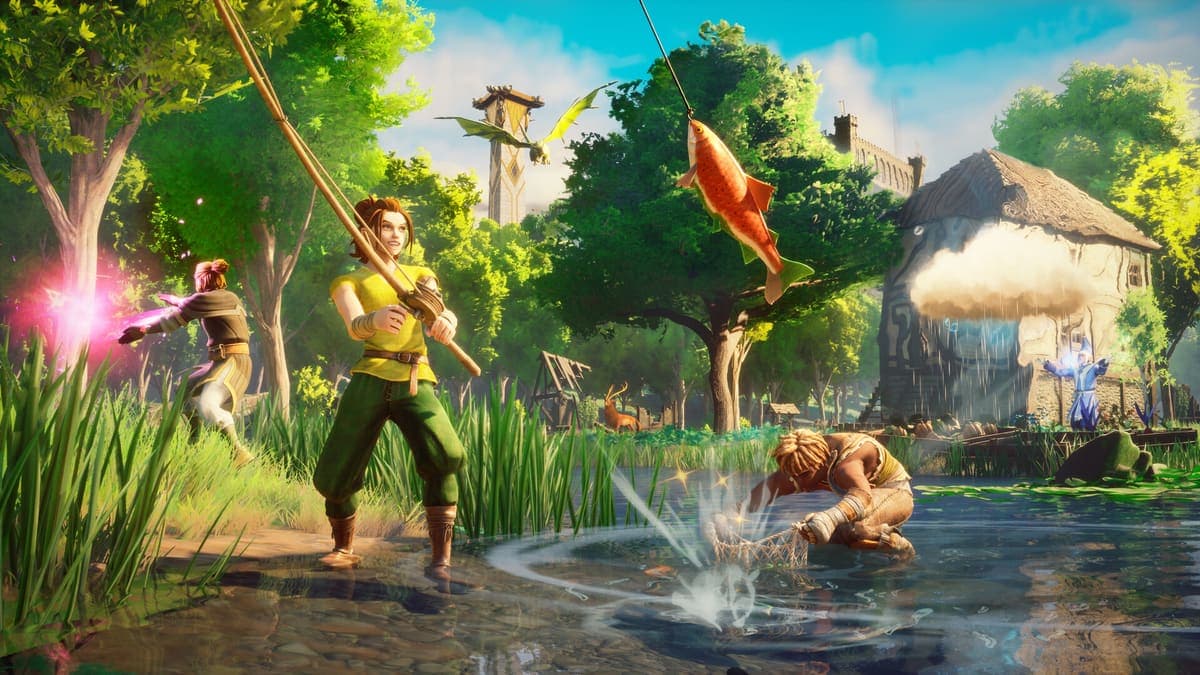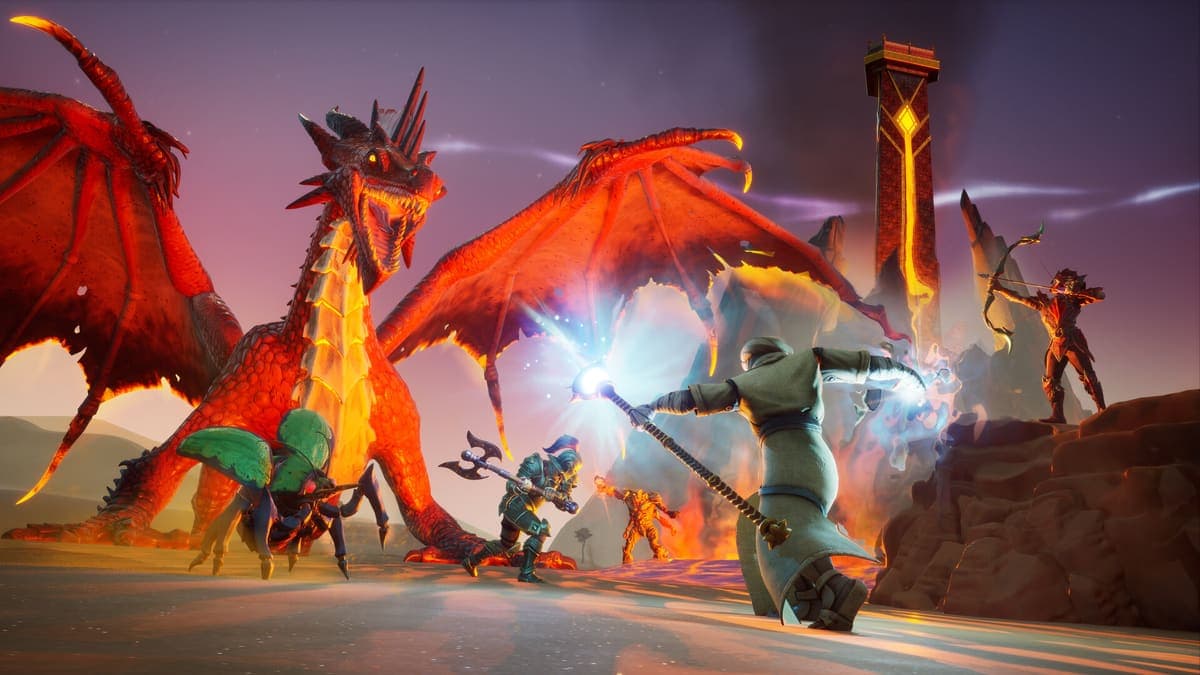
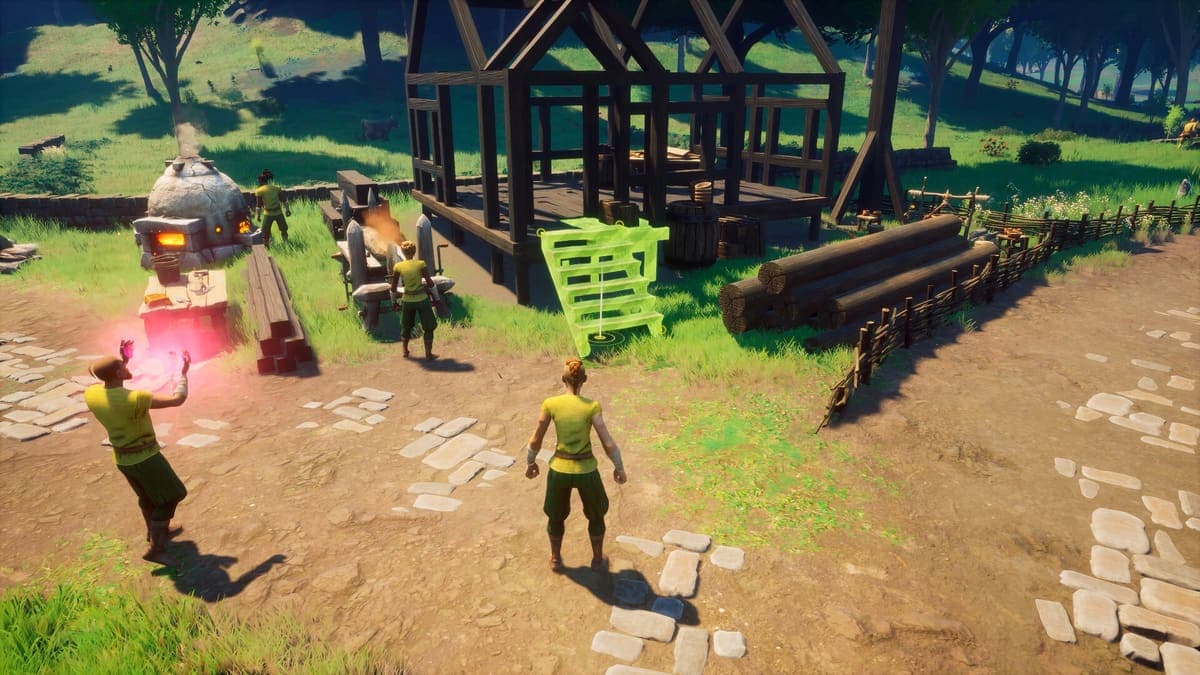
Four and six, and which one you get depends entirely on who is running the world.
A player-hosted world holds four people, the host included, and only exists while the host is in it. A dedicated server holds six and keeps running whether anybody is online or not. Crossplay does not raise either number. A mixed group of PC and console players is still capped at four if someone's PC is hosting.
That distinction is the thing most groups get wrong, usually about ten minutes after a fifth friend buys the game.
If four is enough
Then you do not need a server. Load a world, enable crossplay for that session if your group is spread across platforms, and hand out the invite code. Both the per-session crossplay toggle and invite codes arrived with 1.0 on 15 September.
The catch is availability. The world lives on the host's machine, so progress only happens when the host is playing. For a group that plays together on a schedule, that is fine. For a group where two people want to grind Mining on a Tuesday afternoon, it is not.
Sizing a dedicated server
Jagex's own guidance is 2 GB of RAM plus 1 GB per player. That works out as:
| Players | RAM |
|---|---|
| 2 | 4 GB |
| 4 | 6 GB |
| 6 | 8 GB |
Eight gigabytes for a full house. Modest by survival-game standards, and well within what a spare desktop can do.
You need a 64-bit Windows or Linux host, port 7777 open by default, and the owner's Player ID entered before the server will start at all. Shockbyte offers managed hosting with automatic updates if you would rather not run it yourself, with plans scaling by player count.
The three things that make a server look broken
Every one of these produces the same symptom, which is a server that appears to not exist.
Version mismatch. The client and the server must be on the same build or the server is simply invisible to everyone. This is the one that bites on patch day, and Dragonwilds has been patching briskly: 1.0.0.5 on 25 September, 1.0.0.6 four days later, 1.0.0.7 after that. Restart your server after every patch. Jagex said so explicitly for 1.0.0.7.
Searching by the wrong thing. You do not find a server by its server name. You search by world name, and it is case sensitive. "Ashenfall" and "ashenfall" are two different searches and only one of them works.
Editing config while it runs. Changes made to a running server's configuration are discarded on restart. Stop the server, edit, start it again. There is no in-place reload.
Steam invite integration is also unreliable against dedicated servers, so plan on the world-name search rather than the friends list.
What a server actually buys you
Beyond the two extra seats, persistence is the real argument. Ashenfall is long. The main line runs nine quests across six regions, from Temple Woods out to the Scorned Wilderness, and a lot of the work in between is gathering: ore for the Artisan tree, essence for Runecrafting, materials for whatever base you are building.
A server lets that happen in parallel. One person can be clearing the level 2 vaults in Brynmoor while another farms Astral runes, and neither is waiting on the host to come online.
It also changes how base building works in practice. Home Teleport, added in 1.0, returns you to your bed on a 900 second cooldown, so a shared forward base near whatever region the group is currently working through is worth considerably more than six individual camps.
One known hazard
Patch 1.0.0.5 specifically fixed save corruption originating from modded dedicated servers on console. Separately, roughly a thousand players lost characters to a save corruption bug around launch, which Jagex traced primarily to the Edit Appearance feature and disabled.
Jagex's fix is arriving in 1.0.1, targeted for mid-October: rather than asking affected players to start over, lost characters come back with tier 4 equipment and skills set to aggregated average levels, keeping their name, appearance and private chest access.
If you are running a server, the practical takeaway is to keep it unmodded until that update lands, and to keep your own backups of the world save files. One more thing worth knowing: the save files must keep their original filenames or progress is not preserved. Renaming a backup to something tidier is a good way to lose it.
Co-op is where the weaknesses pay off
Worth a line, because it affects how you split a group. Dragonwilds damage types are specific and bosses rarely share a weakness: the Black Knight Titan and every Zogre want Crush, the Abyssal Demon wants Slash, and every dragon short of Kuldra wants Water.
A four-person group that covers Crush, Slash, Water and a ranged option never has to go back to base to re-gear mid-region. That is more useful than four people running the same optimal build, and it is the clearest practical reason to coordinate rather than all chase the Rune Greataxe at once.