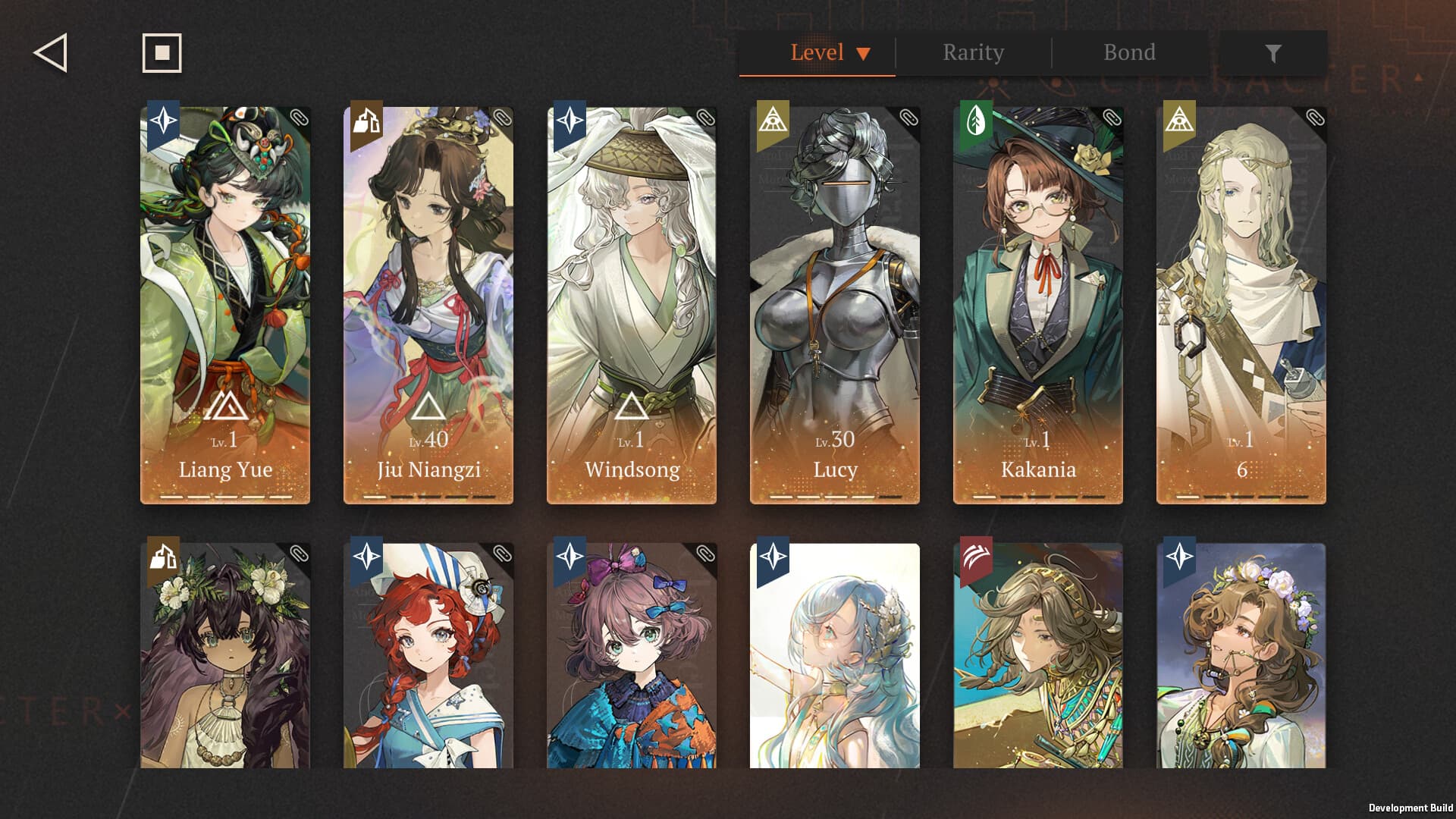
There is a specific kind of player you have met in every gacha community, even if you have never named them. They know who is on the banner after next. They know the kit of a character who will not reach your server until spring. They talk about a story beat you have not played with the weary patience of someone who read the book years ago and is watching you get to the good part. They are not psychic and they are not cheating. They just play a second game on top of the one you both share: they follow the CN server, and it runs about half a year ahead of the rest of us.
Most of the genre's biggest titles launch in China first and roll out globally later, and the lag is remarkably consistent, roughly six months for the HoYo lineup, though the size of it varies more than the folklore admits: Reverse: 1999 currently runs 105 days behind CN, and it held to exactly 84 for ten straight unit debuts before that. That gap is not a rounding error in a release schedule. It is a structural fact that has quietly reorganized how millions of people play games they otherwise experience in the present tense. Once a future exists and is legible, you cannot un-know that it is there. The whole culture bends around it.
The calendar nobody published, that everybody has
Start with the most useful thing the CN lead produces: a schedule. The developers almost never confirm a global banner order far in advance. They do not have to. The CN version already ran it, so the sequence of the next several patches, who reruns and when, which unit headlines which version, what the banner schedule will look like in four months, is public knowledge the moment it happens on the lead server.
This is the engine under the entire "should I save?" conversation. When a guide tells you to bank pulls for a unit two patches out, it is not guessing. It is reading a calendar the developer declined to print but the CN server already filled in. The rerun wait gets a lot less mystical when someone can point at the lead server and say, that unit came back at this interval there, so plan for roughly the same window here. Half the discipline of a healthy free-to-play account, the primogem and pull economy math, the skip-this-to-afford-that decisions, runs on foreknowledge that only exists because someone, somewhere, is playing your game's future in real time and writing it down.
Datamines, leaks, and the two-tier information economy
The CN lead is only half the pipeline. The other half is the datamine: kits, models, and numbers pulled from a version's files before that content is even live on CN, then handed around as leaks. Stack the two and you get an information economy with tiers.
At the top are the leakers and the people who read CN patch notes directly. Below them, the aggregators who translate and summarize. Below them, the reader who catches a filtered version through a tier list or a preview like the next-patch look and never touches a leak thread. And at the bottom, gloriously, the player who has muted all of it and just wants to be surprised. Every one of these people is playing the same game and living in a different relationship to time.
The friction is real. A leaked kit sets the meta conversation before a unit is playable, so newcomers get told a character is bad on the strength of numbers that CN feedback later got buffed. Hype curdles or inflates months early. And the developer loses control of their own reveal cadence, because the fandom already knows the shape of the surprise. Some studios have leaned into this, seeding official "drip marketing" reveals to get ahead of the datamine. It is a tell: when the leak is inevitable, the only move left is to leak it yourself, on your terms.
Spoilers for a game you are currently playing
Here is the strangest thing the CN gap created, and the one that has no equivalent in single-player games: you can be spoiled on the main story of a game you are actively, presently playing.
Think about how odd that is. The narrative is live on CN, so a major character death or plot turn is discussed openly in global spaces months before those quests unlock for you. Communities have had to invent etiquette from scratch to cope, CN-spoiler tags, separate channels, the load-bearing convention that you do not bring lead-server story into a global thread unmarked. It mostly holds, and it constantly leaks around the edges, because the incentive to talk about the thing you just experienced is one of the strongest in fandom, and the person you are talking to might be four patches behind you in the same title.
This is why "avoid spoilers" in gacha is not the casual ask it is elsewhere. You are not dodging a trailer for a game you have not bought. You are dodging the future of a save file you opened this morning.
What it does to the meta, and to the fun
Foreknowledge changes how the meta feels. On one hand it is genuinely useful: knowing a unit gets a rework, a rerun, or a strong future teammate lets you invest with a longer horizon. A tier list that folds in CN performance is more accurate about where a character lands than one built on global-day-one impressions, which is why the good ones do it. Planning is easier when the future is partly readable, and this whole site's team and pull-priority coverage leans on that readability to give advice that ages well instead of advice that looks silly in a month.
On the other hand, a known future can flatten the present. If you have already decided, on CN data, that this patch is a "skip" and the real unit is two versions out, it is easy to sleepwalk through the game you are actually playing toward the one you are waiting for. The waiting-room feeling gets worse the further ahead you can see. The players who seem happiest tend to be the ones who use the CN lead as a budget tool and nothing else, they let it tell them roughly when to save, then close the tab and play the current patch as if it were a surprise, because for their account, in the only timeline that spends their pulls, it is.
The quiet argument underneath
The CN divide is, in the end, an argument about what a live-service game is for. Is it a story you experience, in which case the lead-server spoiler is a genuine loss? Or is it an account you optimize, in which case foreknowledge is just good information and refusing it is leaving value on the table? Most players are quietly both at once, dodging the story spoilers while gratefully using the banner calendar, and the tension between those two selves is the whole texture of being a global player.
You cannot opt out of the gap. It is baked into how these games ship. What you can choose is your relationship to it: how much of the future you let in, and whether the knowing makes your present better or just makes it feel like a rerun of a show already airing somewhere else. The healthiest players treat the CN server the way you treat a weather forecast. Useful for packing. A bad way to live if you spend the sunny day inside because the app said rain was coming next week.