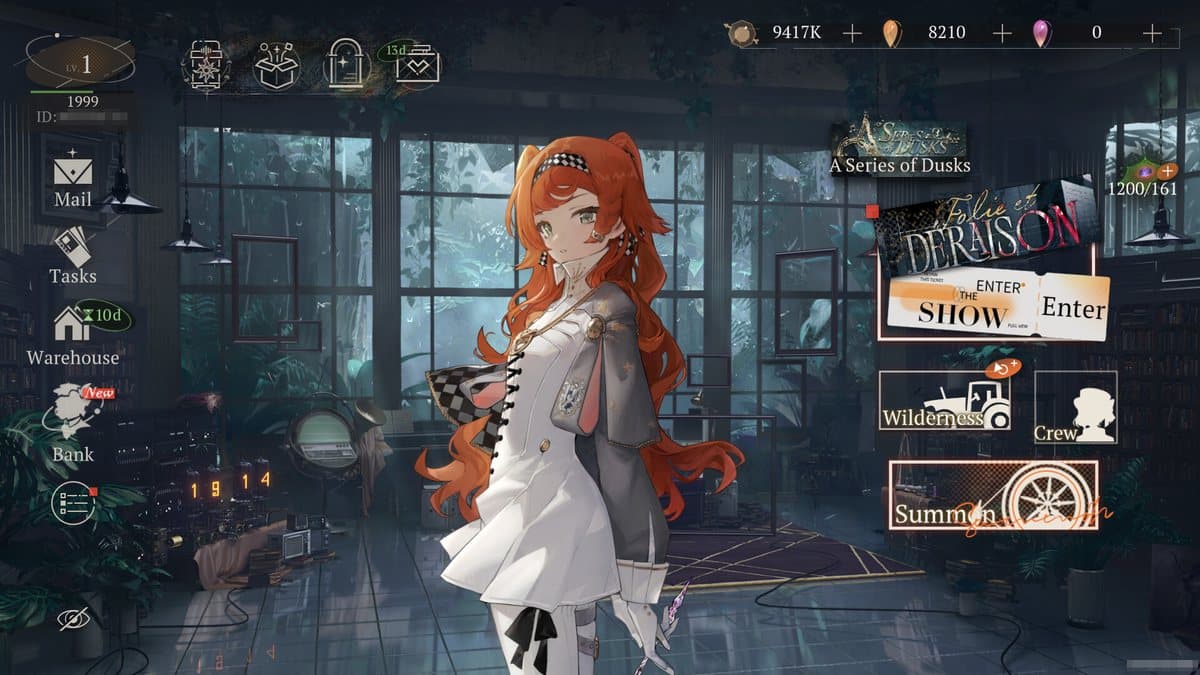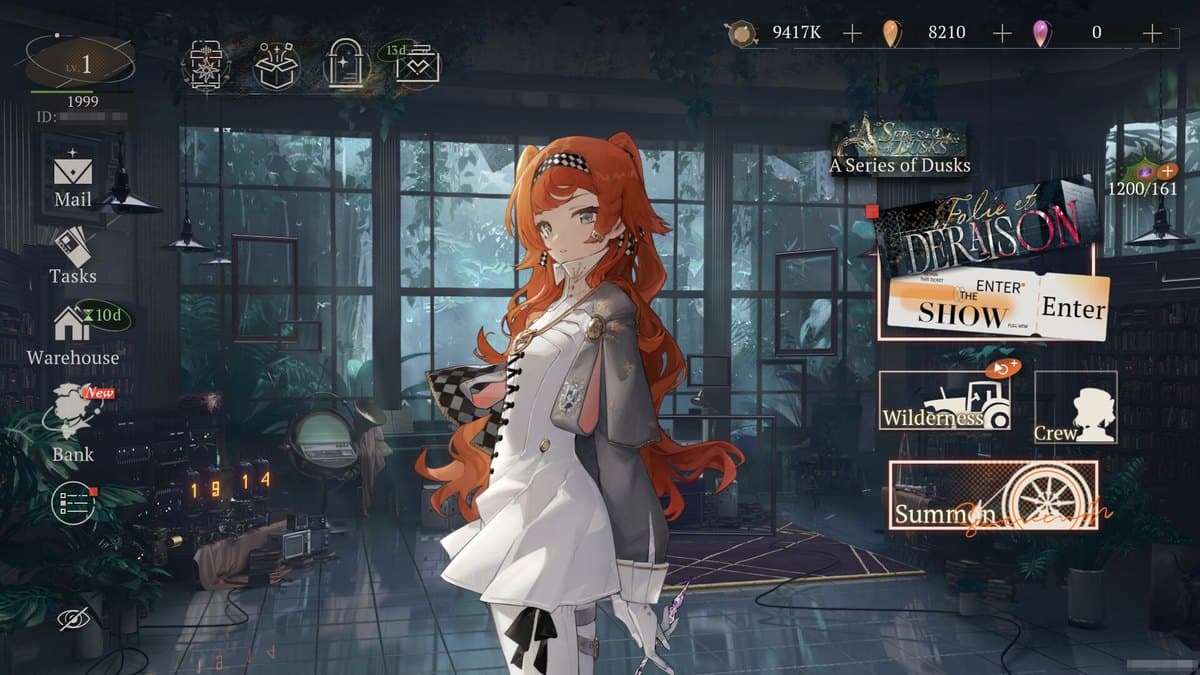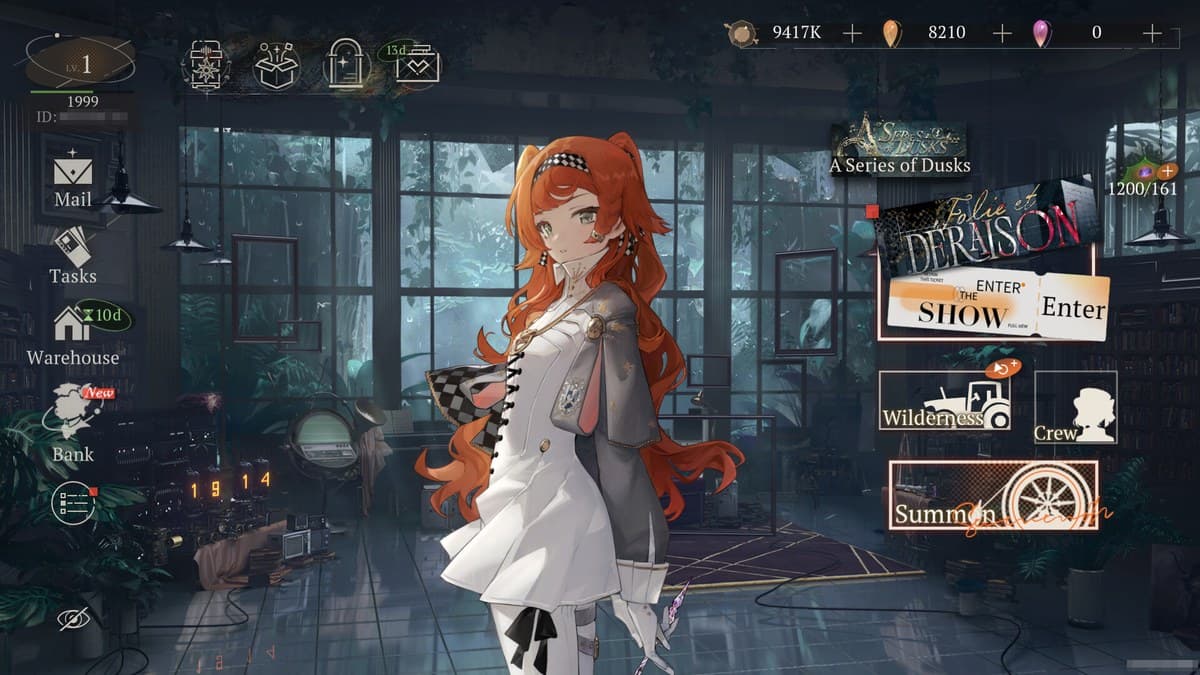
Reverse: 1999 loves an antique name. Sharpodonty, Unilog, Clear Drop, Crystal Drop: it reads like a Victorian apothecary shelf, and the game never really stops to explain which jar you are supposed to be worried about. So before anything else, here is the whole cabinet in plain English.
- Activity is your stamina. You spend it to farm stages, and it refills over time.
- Dust is character experience. It levels your Arcanists.
- Sharpodonty is your gold. It pays for almost every upgrade.
- Clear Drop is the summoning currency you earn for free and bank toward pulls. 180 of them buy one pull.
- Unilog is a ready-made single pull, handed out through events and milestones.
- Crystal Drop is the premium currency you buy with money; it converts into pulls or Unilog.
Learn those six and the game stops feeling like a spreadsheet in a trench coat. Now the part that matters: which ones bottleneck you, and how to farm them without pouring stamina down the wrong drain.
Activity is the real speed limit
Everything downstream, your levels, your gold, your upgrade mats, comes out of Activity. It regenerates steadily, so the only sin is letting it cap and overflow while you are logged off. Spend it down once a day and you never lose progress.
Where it goes matters more than how much you have. Your Activity feeds three farming stages, and you should almost never split it evenly:
- Dust and Sharpodonty stages when a new Arcanist needs raw levels and gold, which is most of the early and mid game.
- Insight material stages when a character is already leveled and you are pushing their Insight and Resonance to unlock their real power.
- Psychube material stages when your carries are built but their gear is holding them back. The Psychube guide covers which ones matter.
Find the one thing stalling your main team and feed that stage. Spreading Activity across all three out of habit is how accounts end up with a roster that is uniformly mediocre instead of one finished team that actually clears content.
Dust and Sharpodonty: the quiet grind
These two are the workhorses, and they run out in exactly the way you do not expect: not the flashy Insight materials, but plain gold and EXP. Sharpodonty in particular gets eaten alive by leveling, Insight ascensions, and Psychube upgrades all at once, and new players almost always hit a gold wall before a material wall.
Two habits keep it healthy. First, do not over-level bench characters. Every level you pour into a unit you will not field is Dust and Sharpodonty you cannot get back. Second, sweep the dedicated farming stages with a Concerto or auto-clear once you have three-starred them, so you are banking mats without babysitting the combat. Save your real attention for progression, not for re-clearing a stage you already own.
The pull economy: Clear Drop, Unilog, Crystal Drop
This is where the fear lives, so here is the honest version. Clear Drop is what you bank. You earn it from first-time story clears, events, daily and weekly missions, mail, and code redemptions, and you convert it into pulls when a banner you want is live. Unilog is the same idea in ticket form, one pull each, and it tends to arrive in bursts from big events and story milestones. Crystal Drop is the paid currency, and if you spend at all it feeds the same pulls.
What a pull actually costs
The game never puts this on one screen, so here it is. Clear Drop converts into Unilog at a fixed rate, and Unilog is what the banner spends:
| What you want | Price |
|---|---|
| 1 pull | 1 Unilog, or 180 Clear Drop |
| 10-pull | 10 Unilog, or 1,800 Clear Drop |
| Hard pity, 70 pulls | 12,600 Clear Drop if you pay the whole way |
Two things fall out of that table. The 10-pull is not a discount, it is the same 180 a pull, but it does carry a floor: every block of ten guarantees at least one four-star or better. And 12,600 is the honest worst-case price of a six-star, which is the number to hold in your head when you are deciding whether a stockpile is "enough" yet.
The banner runs on a pity you can plan around. A six-star is guaranteed by 70 pulls, soft pity opens at 60 where the base 1.5% rate jumps to roughly 4% and then climbs each pull until it hits, and the featured-character rule means a six-star you did not want still puts the next one on the banner as a guarantee. Our pity system page has the full breakdown. The practical rules:
- Count before you pull. Know how deep you are toward the 70 and whether you are on a guarantee before you spend a single Clear Drop.
- Bank for the character, not the banner. Reverse: 1999's slow, deliberate cast means most people play favorites. Skip the banners you do not love and your Clear Drop stockpile turns a coinflip into a sure thing on the one you do.
- Turn limited stages into pulls. Event stages, anniversary log-ins, and the exploration modes hand out Clear Drop and Unilog for free. Clearing them is the highest hourly rate of pull currency in the game.
A weekly rhythm that wastes nothing
- Daily: claim login and mail, grab live codes, clear dailies, and spend Activity on your current bottleneck stage before it caps.
- Weekly: finish weekly missions for the Clear Drop and Sharpodonty they hand out, and reassess whether an upcoming banner means shifting your farming toward a new carry's Insight materials early.
- Event windows: prioritize limited event stages while they are live, because that pull currency does not come back.
Get Activity emptying once a day, aim your Sharpodonty and Dust at one team instead of ten, and bank Clear Drop with a target in mind, and the antique cabinet turns into a simple pipeline. New to the Timekeeper's job? The beginner guide sets your first steps, the tier list shows who is worth the grind, and the endgame guide is where all this farming is quietly pointed.
Exchange rates verified September 26, 2026: 180 Clear Drop buys 1 Unilog and 1 Unilog is 1 summon, with 1,800 for a ten-pull and a guaranteed four-star or better in every block of ten, per the Reverse: 1999 Wiki Summons page and AppGamer. The pity figures are the same ones on our pity system page: hard pity 70, soft pity from 60, base six-star rate 1.5%.