Why do some Wuthering Waves players clear a boss in a smooth thirty-second dance while yours takes twice as long and feels choppy? Nine times out of ten it is not their characters. It is their rotation. They understand the handoff, and the handoff is the whole game.
Wuthering Waves is not built around a single hero standing on the field carrying the team. It is built around three characters passing a baton, and the baton is a resource called Concerto Energy. Learn how it flows and combat stops being three separate turns and becomes one continuous combo.
Two bars, two jobs
The first thing to untangle is that every character is tracking two different energy meters, and they do very different things.
- Resonance Energy powers your Resonance Liberation, the big Ultimate. It fills as you fight and pays out one large button.
- Concerto Energy is the swap resource. It fills as you attack, use your Resonance Skill, and land your Forte moves. When it caps at 100, you can trigger your character's Outro Skill by using their Resonance Liberation or swapping out, and that Outro hands a buff to whoever you swap to next.
Most new players only watch the Ultimate bar. The players who clear the hardest content watch Concerto, because Concerto is what makes the team greater than its parts.
The handoff: Outro and Intro skills
Here is the mechanic that ties a team together.
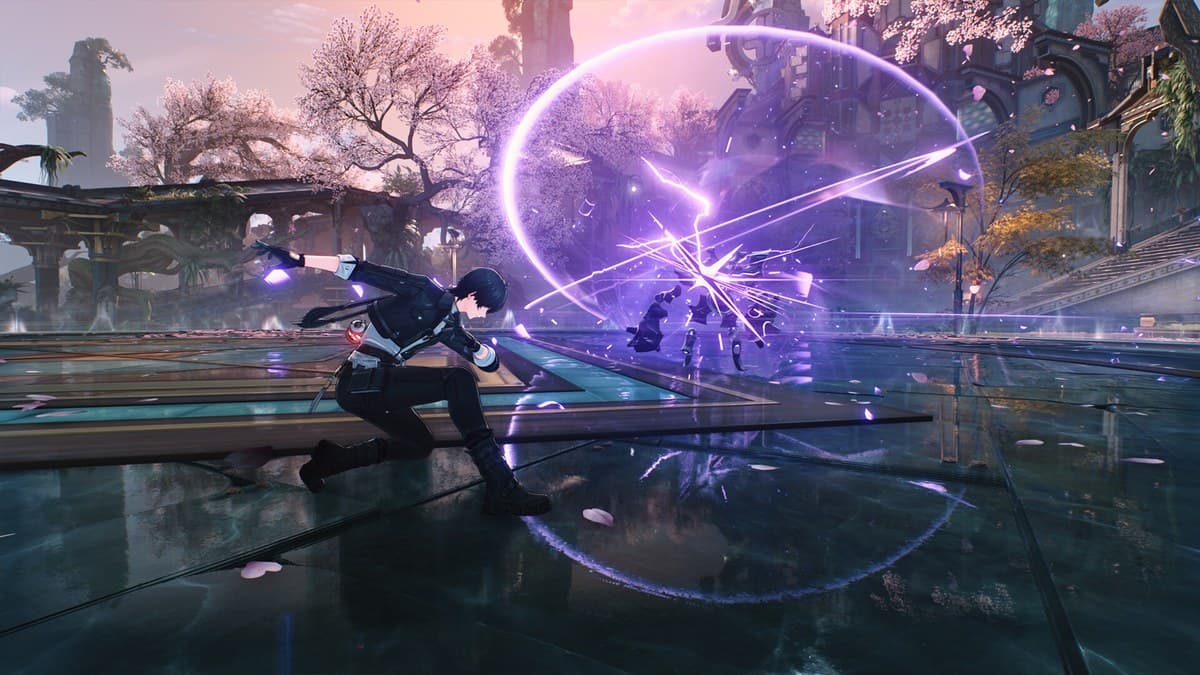
When your active character fills Concerto Energy and you swap out, they fire an Outro Skill. The character you swap in arrives with an Intro Skill, a burst of damage or a stance-setter that plays on entry. The Outro of the character leaving usually applies a buff to the character arriving. Chain those correctly and every swap is a damage spike layered under a fresh buff.
So the core loop of Wuthering Waves is:
- Play a character until Concerto Energy is full.
- Fire their Resonance Liberation or swap to trigger the Outro Skill (and its buff).
- The next character enters on an Intro Skill, now boosted by that buff.
- Build their Concerto, and repeat down the line.
Done well, the buff from the character leaving is still ticking when your main damage dealer arrives and dumps their whole kit into the window. That is the "quick swap" everyone talks about, and it is the reason a three-person team in Wuthering Waves feels like one character with three movesets.
The standard team shape
Almost every strong Wuthering Waves team, from beginner setups to endgame monsters, follows the same skeleton. The best team comps guide has specific pairings, but the roles are consistent:
| Slot | Role | Job in the rotation |
|---|---|---|
| Main DPS | Damage core | Enters last, buffed, and deals the bulk of the damage |
| Sub-DPS or amplifier | Buff and burst | Builds Concerto fast, Outro buffs the carry, adds off-field damage |
| Support or healer | Setup and sustain | Opens the rotation, applies a team buff, keeps you alive |
The order matters. You typically open with the support or amplifier to build and apply buffs, then bring the main DPS in last so it inherits every buff stacked ahead of it. A rotation that leads with the carry is a rotation that spends its biggest damage window unbuffed.
Building a rotation that never drops a buff
The difference between a good rotation and a great one is uptime. Buffs from Outro skills last a set duration or a set number of hits, and the goal is to make sure your main DPS is on the field, mid-burst, for the entire time that buff is live.
A few principles that hold across almost every team:
- Front-load your setup. Get your buffs and Concerto going on the setup characters before your carry ever touches the field. Wasting the carry's opening seconds building its own Concerto is a common, costly mistake.
- Do not overstay. Once a character has fired its Outro and dumped its damage, get off the field. Standing on a character with an empty Concerto bar and a spent kit is dead time.
- Sequence around the buff timer. If your amplifier's Outro buffs the carry for, say, a handful of seconds, your carry's biggest combo needs to fit inside that window. Practice the timing until it is muscle memory.
- Let Echoes fill the gaps. Your Echo is a summon and part of the rotation, not an afterthought. A well-timed Echo can add damage or a buff exactly when you need to bridge two characters.
If your rotation keeps falling apart mid-fight, the culprit is usually defense: getting hit interrupts your flow. Tightening up your parry, dodge, and counter is what lets you run the rotation cleanly instead of scrambling.
Where rotations get tested
The place all of this comes together is the endgame. The Tower of Adversity is a rotation exam disguised as a combat challenge: limited time, tough enemies, and only enough of a clock to reward a team that swaps cleanly and never wastes a buff. If you can hold a rotation together against a Tower boss, you can hold it anywhere.
This is also where investment starts to matter. A rotation is only as strong as the numbers behind it, so make sure your carry's Sequences and weapon are prioritized, and that you have the Waveplate economy working for you so your best units are actually built rather than half-leveled. A flashy rotation on undergeared characters still bounces off a health bar.
Common rotation mistakes
- Leading with the main DPS. Your carry should enter last, into a pile of buffs, not first into an empty field.
- Ultimate tunnel vision. Concerto Energy and its Outro buffs are often more important than the Resonance Liberation. Watch both bars.
- Overstaying on spent characters. If a character's Concerto is empty and its kit is on cooldown, swap away. There is nothing left for it to do.
- Ignoring the Echo. It is a rotation piece with real damage and utility. Fold it into the sequence.
- Not practicing the timing. Buff windows are short. The only way to consistently fit your burst inside them is repetition. Drill the rotation on an easy enemy until it is automatic.
The bottom line
Wuthering Waves rewards choreography over brute force. Build Concerto Energy, fire your Outro to buff the incoming character, and bring your main DPS in last to cash the whole stack in. Keep your buffs overlapping, do not overstay, and drill the timing until the swaps feel like one motion. Once the handoff clicks, your team stops feeling like three characters taking turns and starts feeling like a single, unbroken combo, which is exactly what the game was built to be. New here? Start with the beginner guide, and if you are weighing whether to commit, the full review lays out where Wuthering Waves stands in 2026.