Open your Steam library and sort by playtime, ascending. Scroll past the zeroes. There they are: the games you were sure you would love, bought in a fit of enthusiasm at 80 percent off, and never once launched. Somewhere in that list is a critically adored 40-hour RPG you have owned for four years and touched for eleven minutes. Welcome to the pile of shame. Everybody has one. Almost nobody talks about how strange it is.
The backlog is not a to-do list
The first lie we tell ourselves is that the backlog is a queue. A neat line of games waiting their turn, and one day, when life calms down, we will work through them in order like a reading list. This is a fantasy. Life does not calm down, the line only ever grows, and the game you actually play next will be whatever a friend messages you about on a Tuesday, not the one that has been patiently waiting since 2021.
Treating the backlog as a to-do list is where the guilt comes from. A to-do list you do not finish is a failure. But you did not fail. You bought a bundle of possibility for the price of a sandwich, and possibility does not expire just because you did not cash it in this month. The unplayed game is not a debt. It is an option you are allowed to never exercise.
How buying quietly detached from playing
There was a time when a game cost real money and shelf space, and you finished it because you had bought exactly one and it had to last. Scarcity did the work. You learned every level of that one platformer because it was the only platformer you owned.
Then storefronts made buying frictionless and sales made it feel almost free. A wishlist notification, two clicks, and a new game lands in your library without you ever standing up. The act of acquiring became its own small pleasure, separate from playing, closer to collecting. We started buying games the way people buy books they intend to read: partly for the future self we imagine, the one with endless free evenings and perfect focus, who will finally get to all of it.
That future self is not coming. And that is fine, as long as you stop pretending you are buying for them.
The tyranny of the 100-hour game
Part of the pile is our own fault, and part of it is the industry's. Games got longer. Somewhere along the way, "value" got measured in hours, and a 12-hour game that respects your time started to feel like a rip-off next to a 90-hour open world stuffed with towers to climb and icons to clear.
So we buy the enormous ones, because they look like more game for the money, and then we bounce off them because starting a 90-hour commitment on a weeknight feels like signing a lease. The tight, finishable games, the ones you could actually complete in a weekend, get skipped in favor of epics we will never start. The backlog is not full of games we did not have time for. It is full of games we were too intimidated to begin.
What the pile is really for
Here is the reframe that makes the whole thing lighter. The pile of shame is not evidence of failure. It is a snapshot of your curiosity. Every entry is a moment when something about a game, a trailer, a review, a friend's excitement, made you think "yes, I want to be the kind of person who plays that." The buying was the vote. The playing was always optional.
Seen that way, a big backlog is a good sign. It means you are still interested in more kinds of games than you have time for, which is a far better problem than the opposite. The person with an empty library and nothing they are curious about is the one who should worry.
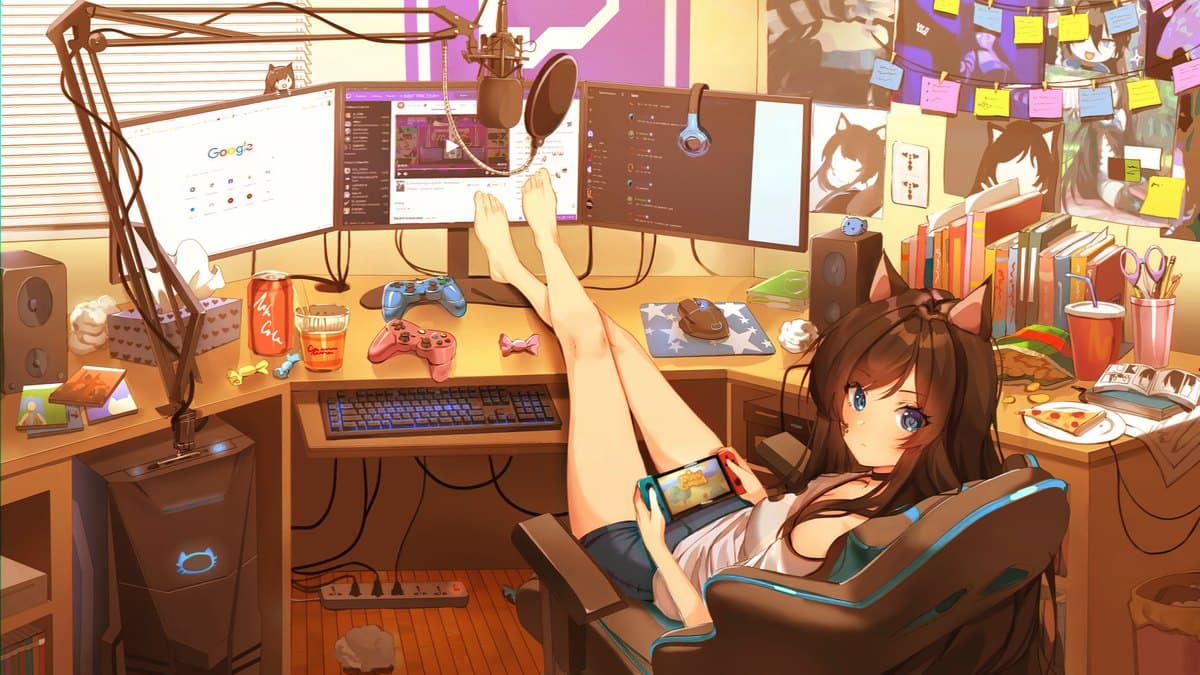
There is also a real, practical use for a deep backlog: it is the best antidote to the paralysis of a live-service treadmill. When you are burned out on daily logins and the endless grind, when a gacha maintenance day has freed up an evening, the pile is right there. A finished, self-contained game with a beginning, middle, and end is a genuine relief after months of a game that is designed to never conclude. The backlog is your escape hatch from the completionist compulsion, if you let it be.
Permission to delete the guilt, not the games
You do not need to finish the pile. You do not even need to shrink it. But you can strip out the shame, and here is how.
Stop buying for the imaginary future self with infinite time. Buy the game you want to play this month, and if a sale tempts you toward something you are only mildly curious about, wishlist it instead and see if the interest survives a week. Let the backlog be a menu, not a mandate. Pick from it by mood, abandon anything that is not landing without a second thought, and never once apologize for the RPG you will die having never started.
And when you do finally launch one of those long-ignored games and it turns out to be exactly as good as everyone promised, savor it. That is the pile paying off. It only has to happen once in a while to justify the whole beautiful, guilt-free, ever-growing thing.
Your library is not a chore list. It is a record of everything you have ever been curious enough to reach for. Sort it by playtime, look at all those zeroes, and try, just once, to feel proud of them instead.
If you are looking for something short and complete to break a live-service rut, our best games rankings are a good place to raid the backlog with intent instead of guilt.