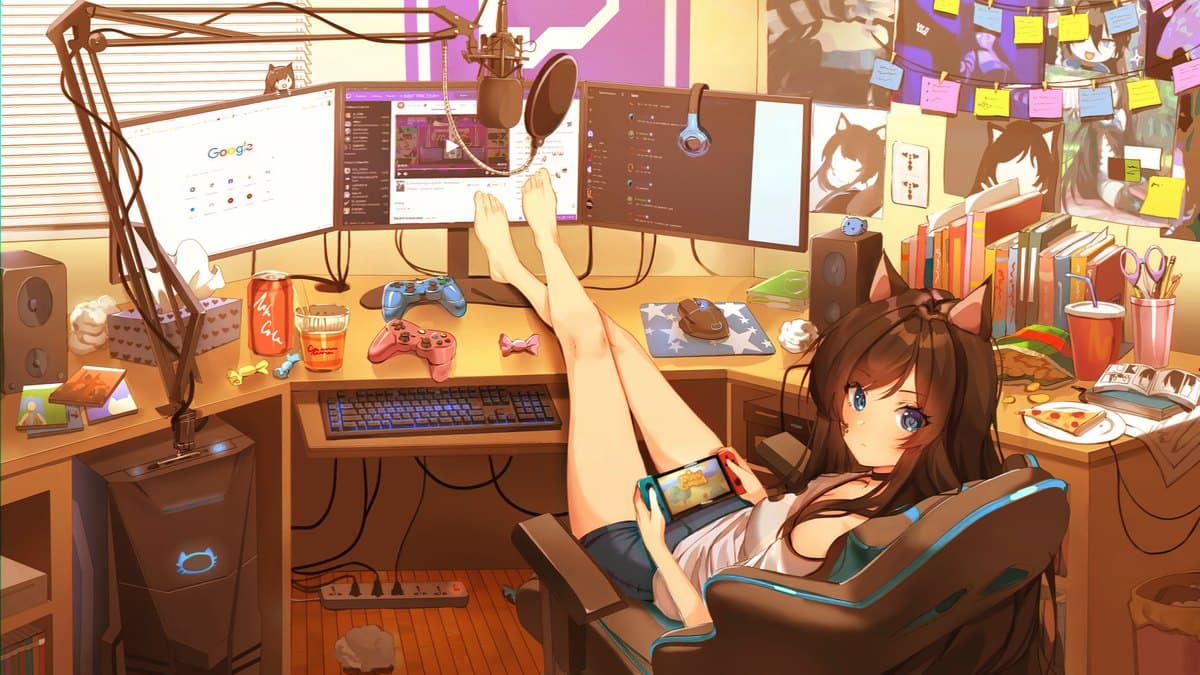
Open your game library right now and scroll to the bottom. Somewhere down there is a game you bought with real enthusiasm, told a friend you could not wait to play, and then never launched. Not once. Maybe there are twenty of them. Maybe there are two hundred. There is even a name for it, half joking and half confession: the pile of shame.
Nearly everyone who plays games has one. The interesting question is not how to clear it, because the internet is full of that advice and none of it sticks. The interesting question is why the pile exists in the first place, and why looking at it makes us feel guilty about a hobby that is supposed to be fun.
How the pile actually forms
The backlog is not the result of one bad decision. It is the slow accumulation of a dozen small, individually reasonable ones.
The sale did it, mostly. Digital storefronts perfected the art of the seasonal sale, and a game marked down to a few dollars barely registers as a purchase. It feels closer to bookmarking. "I will get to it" is not a lie when you buy it, it is a genuine intention, priced low enough that the intention is all you are really paying for. Multiply that by four big sales a year for a decade and the pile builds itself.
Subscriptions poured fuel on it. The all-you-can-play services changed the math entirely. When a hundred games arrive in your library for a flat monthly fee, "owning" a game stops meaning anything and the backlog stops being a shelf you can even see the end of. You are no longer collecting games. You are standing in front of a buffet that refills faster than you can eat.
And hype has a short shelf life. You buy a game at the peak of the conversation, when everyone is talking about it and you want in. By the time you actually have a free weekend, the moment has passed, the discourse has moved on, and the game that felt urgent now feels like homework you assigned yourself.
Why buying feels like playing
Here is the quietly uncomfortable part. A lot of the satisfaction of a game happens at the moment of purchase, before you have played a second of it.
Buying a game is buying a possibility. It is the version of you that finally gets into that huge strategy game, or finishes that acclaimed story, or becomes the kind of person who has beaten the hard one everyone respects. The purchase is a small vote for a better, more disciplined, more cultured you. Actually playing the game is where that fantasy meets the reality of a tired Tuesday evening and a brain that just wants something familiar.
So the pile is not really a pile of games. It is a pile of intentions. Each unplayed title is a little monument to a plan you had for yourself. That is also exactly why it produces guilt: every time you scroll past it, you are scrolling past a version of yourself you did not become this week.
The tyranny of finishing
Underneath all of it sits an assumption worth dragging into the light: that a game you start, you are supposed to finish, and a game you buy, you are supposed to start. Where did that come from?
Nobody feels this way about anything else. You do not feel guilty about the cookbook you have made three recipes from, or the album where you only love four songs, or the magazine you flipped through and set down. But games get filed under "things you complete," like a task list, and so an unfinished one reads as a failure instead of a thing you simply took what you wanted from.
That framing is the actual source of the shame, and it is worth rejecting. A twelve-hour game you played for three hours and enjoyed is not a waste. It is three hours of enjoyment. The other nine were never owed to anyone.
The pile as a feature, not a bug
Try flipping it around. A big backlog is not evidence of a spending problem or a discipline problem. It is a standing invitation you extended to your future self. It means that on any given night, whatever mood you are in, there is already something waiting that a past version of you thought you would love. You did the shopping in advance. The you of tonight just gets to pick.
Seen that way, the pile is one of the healthier things about the hobby. It means you will almost never be stuck without something to play, never at the mercy of what launched this month, never forced to pay full price in a dry spell. The people with the cleanest, emptiest libraries are not winning. They are just always shopping.
A gentler way to hold it
None of this means the guilt is easy to shake, so a few reframes help.
- Delete the word "backlog." It implies a queue you are behind on. Call it a library, which is a thing you browse, not a debt you owe.
- Give yourself permission to quit early and often. Bounce off a game two hours in with zero guilt. You sampled it. That is allowed.
- Buy for the mood, not the milestone. The next time a sale tempts you, ask whether you actually want to play it soon, not whether owning it would make you a more impressive person.
- Let old purchases go. Some games you bought are for a person you no longer are, and that is fine. Their job was to be exciting for one afternoon years ago. They did it.
The pile of shame only has power if you agree it is shameful. Drop that word and it turns back into what it always was: proof that you love this hobby enough to keep saying yes to it.
Pick something off the pile tonight
If this piece nudged you toward finally opening one of those neglected games, let us help you choose. Our roundup of the best survival games to play in 2026 is full of worlds worth the weekend, and if you want something that will actually hook you rather than sit unplayed, the best games like Valheim list is built around exactly that. Or just browse our reviews and let a score make the call for you.