There is a game on your drive you have finished more times than you would admit out loud. Not your favorite in the "best game ever" sense, necessarily. The one you open at eleven at night after a day that took too much out of you, when a new game feels like more work than rest. You know exactly where everything is. You know what happens next. That is not a flaw in the experience. That is the entire reason you opened it.
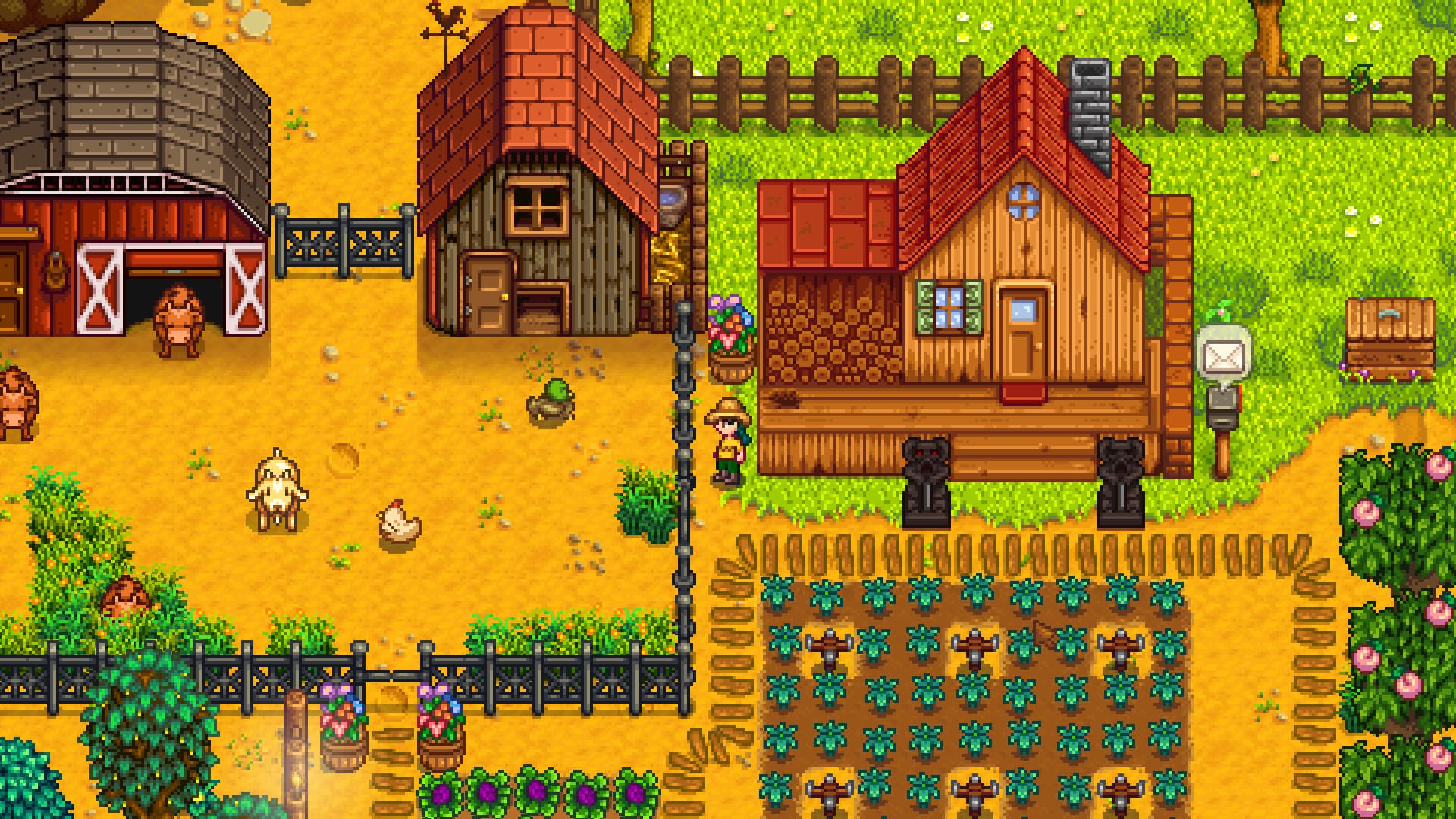
We talk endlessly about games as challenges to conquer and stories to be surprised by. We talk far less about the other thing games do, which is sit with us. The comfort game is the most quietly universal object in the hobby, and almost nobody plans to have one. It just accretes, one tired evening at a time, until you realize you have put four hundred hours into a farm you have technically already "beaten."
The point is that nothing surprising happens
New games ask a lot. They want you to learn a control scheme, hold a map in your head, track objectives, meet characters, and stay alert to a difficulty curve that is actively trying to catch you off guard. That is thrilling when you have the energy for it. It is exhausting when you do not.
A comfort game removes every one of those demands. You already speak the language. Your hands know the buttons without your brain getting involved. There is no learning tax, no fear of a wall you cannot beat, no anxiety about wasting your limited free time on something that might turn out bad. The pleasure is the opposite of novelty. It is competence, familiarity, and the specific relief of a place where you already know you belong.
Psychologists have a tidy phrase for part of this: the mere-exposure effect, our tendency to like things more simply because we have encountered them before. Comfort games weaponize it. The tenth harvest, the hundredth loading screen, the same shopkeeper's same greeting: repetition that would bore us in most contexts becomes soothing, because predictability is exactly what a frayed nervous system is asking for.
What actually makes a game "comfort"
Ask a hundred players and you will get a hundred different titles, which is the interesting part. One person's comfort game is a farming sim, another's is a competitive shooter they have played since school, another's is a brutal roguelike they find meditative. The genre does not decide it. A few shared traits do.
- Low or optional stakes. Even in harder comfort games, the failure state is gentle or familiar enough to stop being scary. You have made this mistake before. It costs you nothing you cannot easily rebuild.
- A loop you can run on autopilot. Plant, water, sell. Push the lane, farm the jungle. Clear the room, pick a boon. The rhythm is regular enough to occupy your hands and quiet enough to let your mind wander or settle.
- A world that stays put. Comfort games tend to have a strong, consistent sense of place. You are not just doing tasks, you are returning somewhere. The town, the derelict station, the valley: it is the same when you come back, and that reliability is doing emotional work.
- A clean exit. You can stop any time without losing much. No forty-minute raid you dare not abandon. Comfort is partly about control, and being able to leave is part of feeling safe enough to stay.
The stigma, and why it is nonsense
There is a low hum of guilt around all this, the same guilt that trails most restful things in a culture that treats leisure as something to optimize. Replaying an old game can feel like standing still. Shouldn't you be playing the new thing everyone is talking about? Shouldn't you be clearing the backlog you already feel bad about?
But the comfort game is not the backlog's enemy, it is the counterweight to it. The pile of unplayed games is a to-do list; the comfort game is a place to rest so the to-do list stays fun instead of becoming a chore. Nobody frowns at rereading a beloved book or rewatching a show that makes them feel okay. Games get the side-eye only because we still, absurdly, half-believe every session has to be about getting better at something.
It does not. Sometimes the most valuable thing a game can do is be a room you already know the shape of in the dark.
What they are quietly doing for us
The people who study this seriously keep landing on the same conclusion: comfort games function a lot like emotional regulation. They give a stressed brain a low-stakes environment to decompress in, a sense of small, achievable progress when the rest of life offers none, and a feeling of agency and mastery precisely when the outside world feels unmanageable. That is not escapism in the dismissive sense. That is maintenance.
There is also something gently poignant in it. A comfort game becomes a kind of diary you did not know you were keeping. You return during finals, during a breakup, during a rough winter, during the good stretches too. The valley does not change, but you do, and every replay is layered faintly with the version of you who played it last time. Loading the save is a small act of continuity, proof that some things wait for you exactly where you left them.
So no, you are not wasting your time on that farm, that dungeon, that map you could navigate blindfolded. You are doing what people have always done with the stories and places that make them feel safe. You are going home for a while.
Where to go next
If your comfort game happens to be a farming sim, or you are looking for the next place to sink into, our Stardew Valley first year roadmap is a warm on-ramp and our list of the best games like Stardew Valley in 2026 is a whole shelf of candidates. And if the guilt this piece describes rings a bell, our look at the pile of shame is the companion read. More features live in the guides hub.