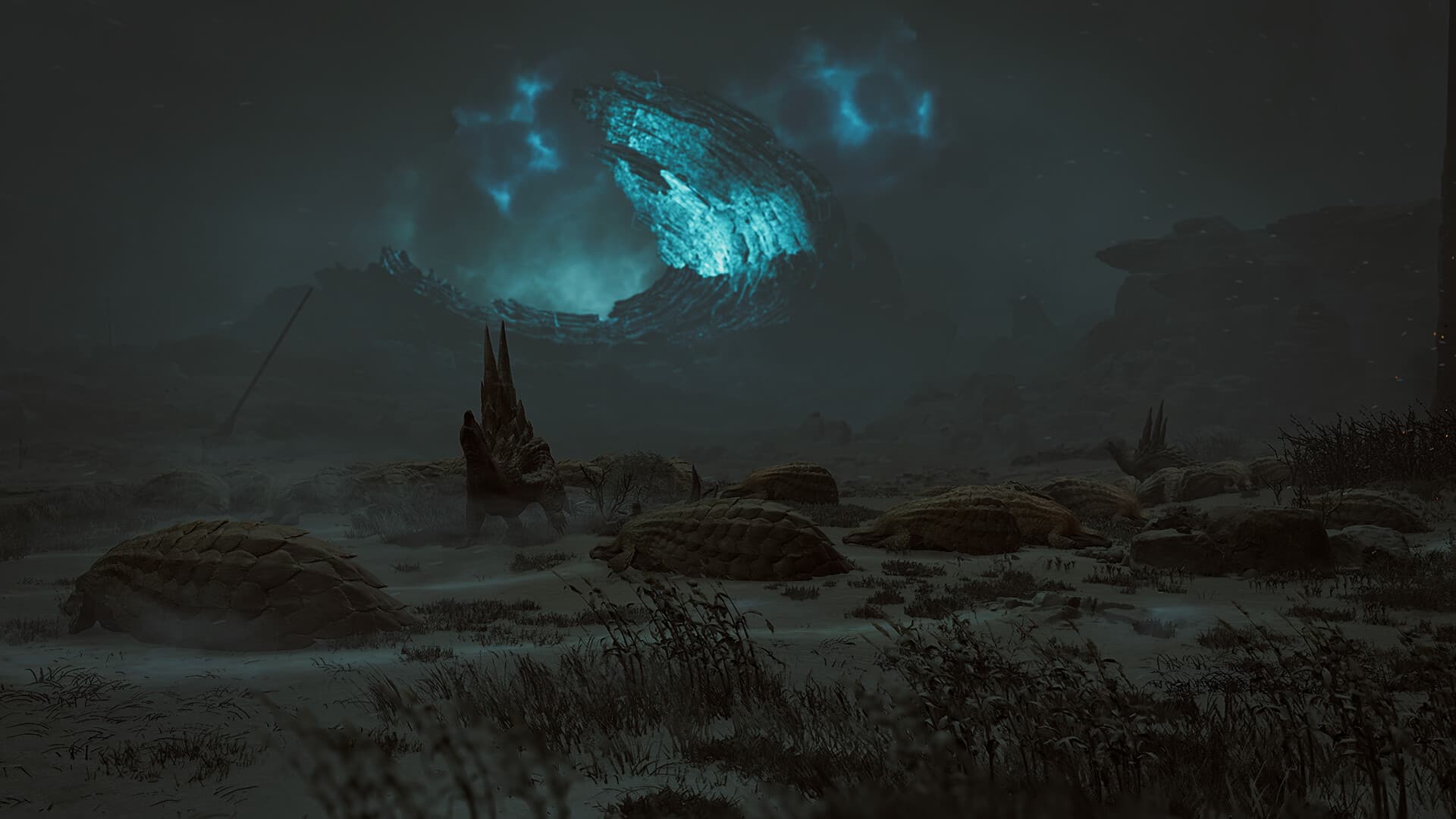
You take one hit too many. The screen fades. And instead of a grim "you died," a tiny handler and an even tinier cart trundle out, scoop up your unconscious hunter, and haul you back to base camp like a sack of potatoes. You are not dead. You are carted. Get up, gulp a potion, sprint back in. But the cart appears only three times per hunt, and everyone in the party knows it.
That single, faintly ridiculous animation is one of the most quietly brilliant things in games, and it has grown a culture all its own. Monster Hunter did not just decide how you lose. It decided how you feel about losing, and then let a couple of decades of players turn that feeling into an inside joke, a source of dread, and a bond.
The genius is that it is not a death screen
Most games treat failure as a hard stop. You die, the world resets, a wall of text asks if you would like to try again. Monster Hunter refuses that. Getting knocked out is not the end of the run, it is a setback with a running counter. You have three faints as a shared party pool. Burn all three and the quest fails, so every cart is a withdrawal from a joint account everyone is watching.
This changes the emotional texture of a fight completely. A death in most games is a full stop. A cart is a comma. You are annoyed, you are behind, you might be a little embarrassed, but you are also immediately back on your feet and running, which means the story of the hunt keeps going. The tension does not evaporate on failure, it tightens, because now there are only two carts left and the monster is limping and nobody wants to be the one who ends it.
The vocabulary of getting bodied
Any long-lived community builds a language, and carting sits at the center of Monster Hunter's. "Carted" became a verb the way "ganked" or "clutched" did elsewhere, but with a gentler, more self-deprecating tone. You do not rage about being carted. You confess it.
The phrases stack up around it. The triple cart, the quest-ending third faint, is the community's shared nightmare and its richest source of comedy. The specific horror of being the person who triple-carts a group forty minutes into a hunt is a bonding experience precisely because everyone has been that person. There is the fresh hunter who carts to the intro cutscene monster, a rite of passage. There is the veteran who insists they "didn't cart, the game carted me," blaming a wall, a camera angle, a hitbox that surely did not connect. And there is the universal, sheepish typed apology in co-op after you go down doing something greedy: my bad.
None of this is bitter. That is the remarkable part. In a lot of multiplayer games, a wipe triggers finger-pointing. In Monster Hunter, a cart triggers a laugh and a plan.
Why it makes co-op better, not worse
You would think a shared failure pool would breed resentment, one careless player tanking three strangers' hunt. Occasionally it does. Far more often it does the opposite, because the mechanic quietly teaches a team ethic.
When your mistakes cost the group and not just you, you start paying attention to the group. You learn to back off when you are low instead of greeding one more hit. You learn to prioritize reviving the situation over your own damage numbers. You watch your teammates' health bars, not just the monster's. Some of the best unspoken teamwork in gaming happens in a Monster Hunter lobby of four strangers who have never typed a word to each other but are all silently, collectively managing a cart budget.
And when it goes wrong, the failure is shared, which is a completely different thing from being blamed. A group that triple-carts together tends to immediately re-queue, because the loss was collective and so is the shrug. You were all in it. You will all get it next time.
Failure as the actual curriculum
Underneath the jokes, carting is how Monster Hunter teaches. These are fights you are supposed to lose before you win. The genre expects you to cart to a monster, go back to your notes, adjust your armor's resistances, pack the right traps and flinch-free skills, watch the tells you missed, and return prepared. The cart is not a punishment for failing to be good enough. It is feedback pointing at exactly what you did not yet understand.
That is why hunters who came up through the series speak about their early carts fondly. The monster that carted you six times and then finally fell is the one you remember, because the difficulty of that first kill is what made it mean something. A hunt you flatten on the first try leaves no mark. A hunt that carts you, teaches you, and then lets you win writes itself into memory.
The little cart is the whole philosophy
You can read the entire design attitude of Monster Hunter in that one animation. Failure is not shameful, it is data. It is not final, it is a comma. It is not solitary, it is something you carry together, sometimes literally, on a comically small cart. The game could have shown you a death screen. Instead it shows you a ride home and a chance to run back in, and in doing so it turned the worst moment of a hunt into the one everyone quotes at each other for years.
Where to go next
If all this has you eyeing your first hunt, the choice that shapes everything is your weapon, and our Monster Hunter Wilds weapon types guide walks all fourteen so you cart on your own terms. This same "learn by losing" spirit runs through a whole family of games; our feature on soulslike challenge-run culture explores its more extreme cousin, and the Elden Ring starting class guide is a good on-ramp to that side of it. More features live in the guides hub.