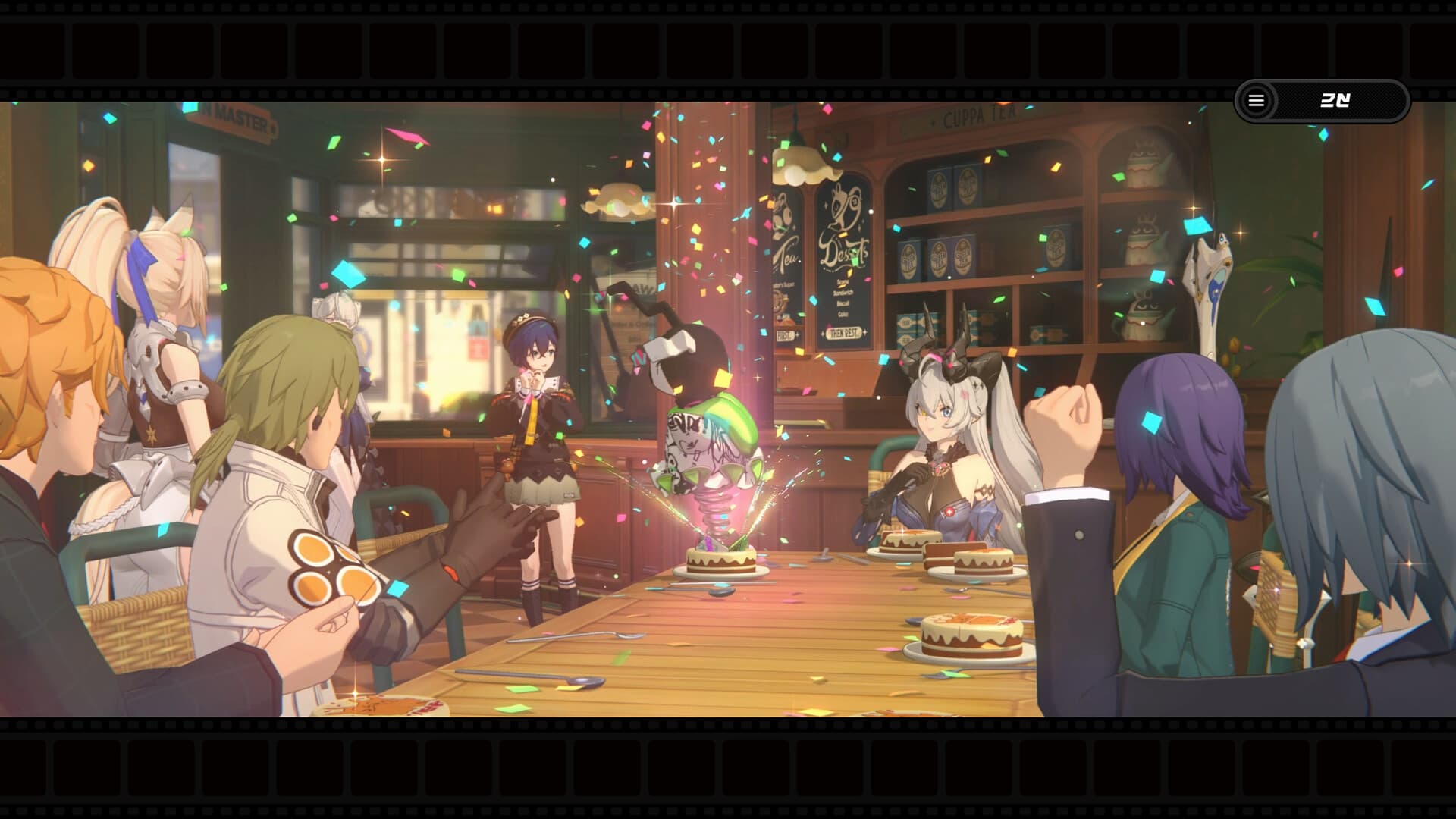
Do the math on a single ultimate animation and the argument settles itself. Call it three seconds of unskippable flourish: the pose, the name callout, the screen going white. Now multiply by four characters, then by every rotation, then by every run of a farming domain you clear on autopilot twice a day for a year. You are not spending three seconds. You are spending hours a year watching the same four cutscenes you memorized in week one, and you cannot look away, because the game will not let you.
That is the whole fight in one paragraph. Not "are the animations good." They are often great. The fight is that a thing built to be admired got welded to a thing you do a thousand times, and admiration does not survive repetition. The skip button became one of the most-requested features in the entire genre precisely because the burst animation is the clearest case of a design that is beautiful once and a toll booth forever.
What the little movie is actually doing
Start with why it exists at all, because it is not laziness and it is not filler.
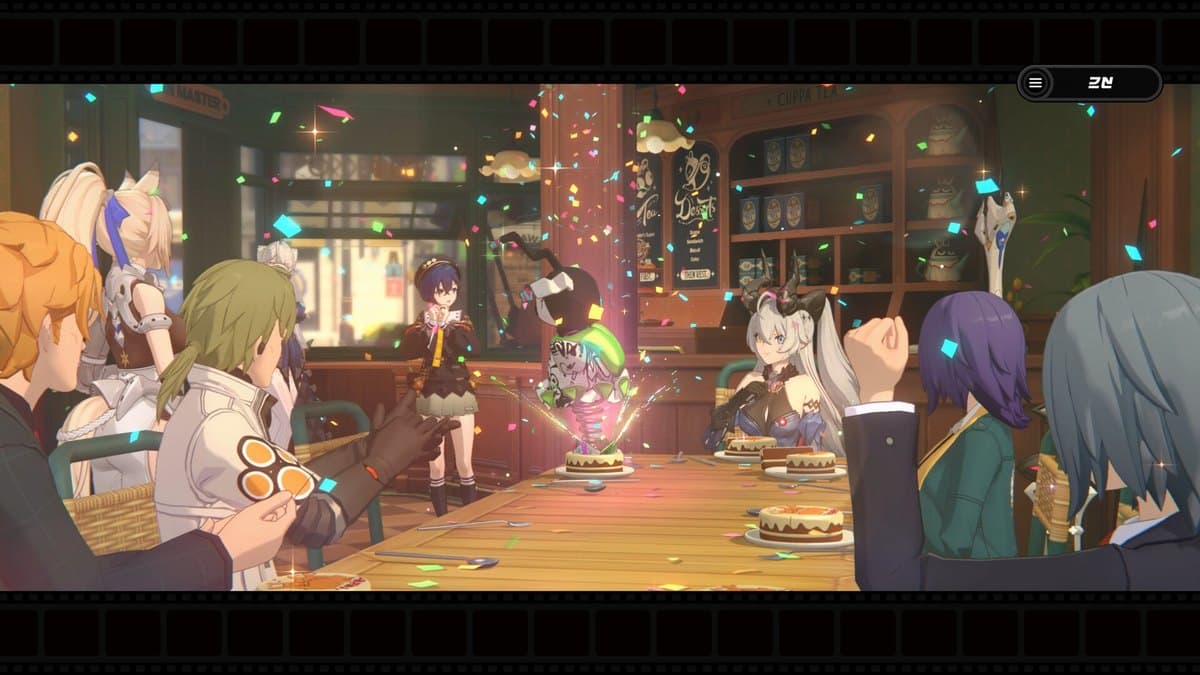
The ultimate cutscene is a reward and a spectacle. When you spend a character's biggest resource, the game wants the moment to land: the camera pulls in, the world dims, the character says their line, and the payoff hits. It is the visual exclamation point on the fantasy you pulled for. For a new character, that three seconds is a huge part of why they feel worth the pity. The animators pour real craft into these seconds, and on a first watch they are doing exactly their job, selling the power and the personality in one beat.
There is a mechanical reason too, and it is easy to miss. The burst animation is a loading and state-change curtain. Behind that flash of light, the game is applying buffs, spawning fields, advancing turn order, resolving the actual math. On some engines the animation quietly buys the game a moment to do bookkeeping. That is part of why an instant skip is not always as trivial to add as players assume, and why the earliest "skips" were really just speed-ups.
So the cutscene is three things at once: a marketing beat for the character, a dopamine payoff for the input, and sometimes a technical curtain. All three make sense. None of them survive the fourth thousand viewing.
Where the goodwill runs out
The turn happens the moment the game stops being a place you visit and becomes a place you maintain.
Early on, you are in the story, seeing each ultimate for the first or fifth time, and the spectacle is pure upside. Then the account matures and the shape of play changes. Now most of your sessions are daily upkeep: clearing the same stamina domains, grinding the same substat farm, running dailies you could do blindfolded. In that context the ultimate animation is no longer a payoff. It is a forced pause in a chore, three seconds of watching a movie you have memorized while your actual goal, the loot at the end, waits behind it.
This is the exact seam the genre keeps snagging on. A live-service game asks for daily, mechanical, repeated engagement, and then decorates that engagement with cinematic flourishes designed for a single, awed viewing. The two impulses are at war. The spectacle wants you to slow down and admire. The grind wants you to speed up and finish. The burst cutscene is where they collide, twice a day, every day, forever.
And repetition does something specific and a little sad to a beautiful animation: it turns it invisible and then it turns it into an irritant. You stop seeing it as art. You start seeing it as the thing between you and your resin being spent. The most lovingly animated three seconds in the game becomes, functionally, a "please wait" screen with better production values.
The skip button as a peace treaty
For years the community answer was a single loud request repeated in every feedback survey: let me skip. And for years many games resisted, or offered half-measures, an option buried in settings that only sped the animation up rather than removing it, or a toggle that killed the spectacle entirely and felt like turning the lights off in a museum.
The reason the compromise took so long is that a good skip is not one button, it is a negotiation. Kill the animation outright and you have thrown away the character sell and the reward beat that new players and lore fans actually want. Leave it mandatory and you have taxed your most dedicated, highest-retention veterans, the exact people grinding hardest, with a toll they resent. The design has to serve the first-time viewer and the ten-thousandth-time viewer with the same asset, and those two people want opposite things.
The settlements that work all share a shape. Skip when you choose, keep it when you want it. A hold-to-skip or a tap-to-fast-forward that respects your input without ripping the moment away from someone seeing it fresh. Some games gate the skip behind having already witnessed the animation once, which is the genre quietly admitting the whole truth: the cutscene is a first-impression asset, and after the impression is made, it is your time to spend. That is the honest version of the peace treaty. See it once for the awe. Skip it forever after, because your attention is finite and the game already has your whole roster memorized for you.
What the whole argument is really about
Step back and the skip war is a proxy for a much larger question the genre keeps refusing to answer out loud: how much of a live-service game is meant to be watched, and how much is meant to be endured?
Every quality-of-life fight in gacha is a version of this. Auto-battle exists because players turned combat into a second-screen background task. Sweep and instant-clear features exist because nobody wants to sit through the tenth manual run of a stage they have solved. The ultimate-skip request is the same instinct pointed at the one piece of the game the developers most wanted you to look at. When your own players are begging to skip your prettiest asset, they are telling you something precise: this part of the loop is a chore now, dress it however you like.
The genre has slowly, grudgingly agreed. The quality-of-life arms race means a game that ships without a sane skip in 2026 gets compared, immediately and unkindly, to the ones that did. Skip buttons, auto-repeat, one-tap sweeps: these are no longer luxuries, they are the baseline of respecting a long-haul player's time, and the games that treat that time as sacred keep their veterans longer than the ones that treat every farming run as another chance to show off.
How to hold it, as a player
So where does this leave you, standing in a domain you have cleared four hundred times with a cutscene you could draw from memory?
Give the spectacle its one honest moment and then stop apologizing for skipping it. Watch a new character's ultimate on purpose the first few times. That is when it is doing its actual job, and it is genuinely worth seeing, the animators earned that. Then, once it is burned into your memory, turn the skip on without guilt. You are not disrespecting the craft. You are acknowledging that the craft did its work and the moment has passed into muscle memory.
The forced cutscene was never really about art versus efficiency. It was about a genre trying to make a single asset serve both the person falling in love with a character and the person maintaining an account for the four-hundredth day in a row. Those are the same player, six months apart. The skip button is just the game finally admitting it, and handing the older, tireder version of you back the three seconds the newer, dazzled version was happy to give.