You know exactly how they play. You know they always take the left path, that they hoard healing items they will never use, that they go quiet right before they do something reckless. You know the specific pitch their voice hits when a boss enters phase two and everything is about to go wrong. You have spent more consecutive hours with this person than with most people you would call close friends.
You do not know their real name. You have never seen their face. If they walked past you on the street you would not recognize them, and they would not recognize you, and neither of you would ever find out. And somehow none of that has stopped them from being, for a season of your life, one of the people you spent the most time with.
The co-op friend is one of the most real and least discussed relationships gaming produces. It deserves better than to be filed under "just an online friend," because that phrase gets the intimacy exactly backwards.
Doing, not talking
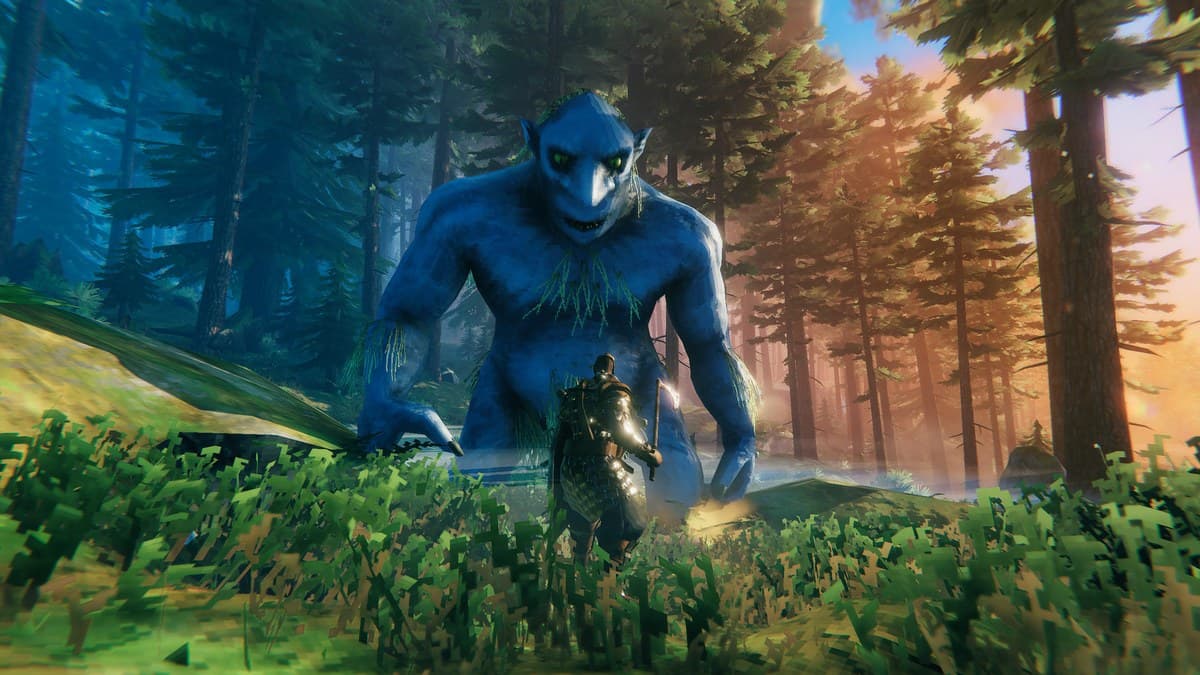
Most friendships are built out of conversation. The co-op friendship is built out of a shared task, and that turns out to be a completely different and sometimes deeper foundation. You did not become close by exchanging life stories. You became close by surviving a horde night together, by rebuilding the base after it burned down, by failing the same raid nine times and finally clearing it on the tenth, screaming.
There is a reason this bonds people so fast. Working alongside someone toward a goal, watching how they behave when things go wrong, learning to trust that they will be where they said they would be when the enemy comes, this is how a lot of the strongest human bonds have always formed. It is how soldiers, bandmates, and kitchen crews describe getting close. The talking is optional. The doing is the thing. Co-op games recreate that ancient bonding mechanism and let two people who will never meet run it for hundreds of hours.
And the knowledge you accumulate is oddly specific and oddly complete. You may not know where they went to school, but you know how they handle pressure, whether they share loot fairly, whether they stay calm or spiral when a run goes bad, whether they would rather save you or save the objective. Those are not small things to know about a person. In some ways they are the things.
The friendship that fits in a game-shaped box
What makes the co-op friend unusual is how completely the relationship is contained. It has an address: a specific game, often a specific server, sometimes a specific time of day. It exists there and largely nowhere else. You do not text them about your job. You do not know if they are having a hard week unless it leaks into how they play. The whole friendship lives inside a game-shaped box, and both of you have quietly agreed not to open the lid.
That containment is not a flaw. For a lot of people it is the entire appeal. There is a cleanness to a friendship with no logistics, no obligations bleeding into the rest of your life, no history to manage. You show up, you play, you are genuinely glad to see each other, and then you both log off and return to lives the other will never see. It asks nothing of you except that you be there for the next session and pull your weight when you are. That is a lighter, easier kind of closeness than most of adult life offers, and it can be a real comfort.
It is also, for the same reasons, fragile in a way that catches people off guard.
When the box closes
Co-op friendships tend not to end with a fight or a falling out. They end with a fade. The game you shared runs out of content, or a new release pulls you both in different directions, or one of you gets busy for a few weeks and the standing session quietly stops being standing. Because the whole relationship lived inside the game, when the reason to open the game goes away, so does the friendship, and often there is no bridge to carry it anywhere else. No phone number, no last name, no way to say "let us stay in touch" that would actually mean anything.
And then there is the harder version: the game itself shuts down. Live-service co-op games do not last forever, and when the servers finally go dark they take these friendships with them. The place you two existed simply stops existing. People underestimate how much this can hurt, precisely because they have been told the whole time that it was "just an online friend." It was not just anything. It was hundreds of hours of trust built in a place that no longer has an address.
What it was worth
Here is what the dismissive framing misses. A friendship does not have to be permanent, or complete, or face-to-face, to have been real while it lasted. The co-op friend was there for a chapter of your life, showed up night after night, had your back in every fight that mattered inside that world, and asked for nothing but the same in return. That is not a lesser version of friendship. It is a specific, honest, self-contained version of it, and the fact that it lived in a game does not make the hours any less true.
If you still have one of these friends, and the game is still up, the move is simple and worth making: say the thing. Add them somewhere that outlives the server. Or do not, and let it be exactly what it was, a good thing that fit inside a game and stayed there. Either way, do not let anyone tell you it did not count.
For more on the games that build these bonds in the first place, we ranked the best co-op survival games of 2026, and if you want the solo-comfort flip side of all this, the comfort games we replay piece is about the worlds we return to alone.