How it works in Subnautica 2
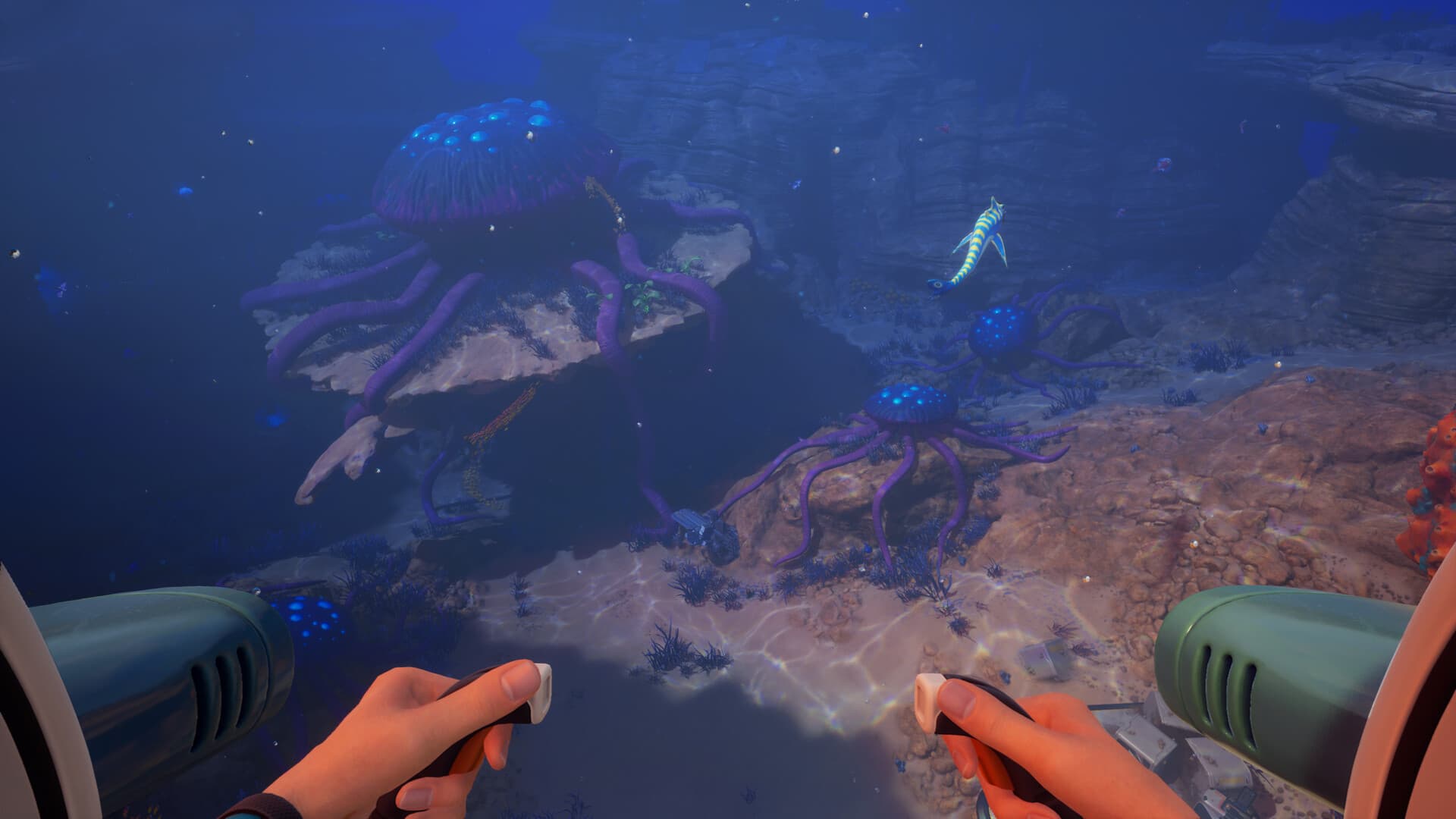
Subnautica 2's headline feature is four-player co-op, and it changes the entire calculus of survival. The original games were a lonely, tense fight against the deep. The sequel lets up to four divers share one ocean, one base, and one set of problems, and that turns the core survival loop, managing oxygen, respecting depth, and never being one bad moment from drowning, into a coordination problem. Play it right and a friend is a second oxygen supply, a second set of eyes on the leviathan, and a rescue when you would otherwise be stranded. Play it wrong and you are four people making the same mistake at once. This guide covers how to actually survive the deep as a group.
New to the sequel entirely? Start with our Subnautica 2 beginners guide first, then come back here for the multiplayer layer.
Co-op Does Not Remove the Danger, It Multiplies It
The most important mindset shift: more players does not mean more safety by default. Subnautica 2's ocean is still built on the same two meters that kill you solo, your oxygen countdown and your vehicle's crush depth, and a group can run both to zero just as easily as a lone diver. In fact, a careless group is more dangerous, because it is easy to follow a confident teammate straight into water none of you are equipped for.
The upside is real, though, and it is why co-op is worth it. A coordinated pair can push deeper and safer than either could alone: one holds position near an oxygen source or the vehicle while the other makes a short excursion, then they swap. That "one anchors, one explores" rhythm is the single most important co-op technique in the game, and it is the foundation of everything below.
Assign Loose Roles Early
You do not need rigid classes, but a group that drifts into natural roles survives far more than one where everyone does everything. The common split:
- The builder. Owns the shared base: power, storage layout, and pushing forward outposts toward new biomes. Our base building guide is their bible.
- The scout. Maps biome edges, finds wrecks and resource nodes, and identifies where the dangers are before the group commits an expensive expedition.
- The gatherer. Keeps the shared stores stocked with the materials the builder and the vehicles constantly burn through.
- The driver. Manages the group's main vehicle, keeps its depth module upgraded, and positions it as a mobile oxygen-and-storage lifeline at the edge of dangerous zones.
Roles can rotate, and in a two-player game one person wears two hats. The point is that someone is thinking about the base, someone is thinking about the route, and someone is thinking about the ride home, rather than four people all swimming in the same direction hoping it works out.
The Shared Base Is Your Collective Lifeline
In co-op, your base is not just storage, it is the point everyone respawns to and refuels at. That makes two things non-negotiable:
- Build forward, not just deep. As the group pushes toward a new biome, plant intermediate outposts and moonpools along the way. In co-op these double as respawn and oxygen points, so a death at the frontier does not mean a punishing swim back from the surface for whoever went down.
- Agree on the layout. Because the base is shared, do not tear down or reorganize a teammate's section without asking. Survival groups implode over exactly this, as our co-op survival etiquette piece lays out in detail. Mark personal projects, keep the commons sorted by consensus, and the base stays an asset instead of a fight.
Depth Discipline, as a Group
Progression in Subnautica 2 is depth progression: the map gates its best resources and its story behind deeper, darker, more dangerous water. In co-op, the rule from our vehicles and depth guide becomes a group covenant: keep the whole party's depth rating a step ahead of the water you are entering.
The failure mode is the fast player. One diver upgrades their vehicle and pushes into a deep biome while a teammate is still in a fragile ride, and now the group is split across a pressure boundary that half of them cannot survive. The fix is simple discipline:
- Move down a tier together. The group is only as deep-capable as its least-equipped member for shared expeditions.
- Upgrade the depth module before the dive, not during it. A pressure buffer for everyone is cheaper than a rescue.
- Never let a teammate solo into a biome the group has not scouted. Depth punishes improvisation, and it punishes it hardest when nobody is nearby to help.
Handling Leviathans Together
Subnautica 2's leviathans, headlined by the Collector Leviathan whose biome anchors Update 1.1, are the encounters where co-op either shines or falls apart. These are large, aggressive predators that patrol their territory, and a group that blunders in as a tight cluster just offers a bigger target.
The coordinated approach:
- Scout the patrol first. Send one diver to learn the leviathan's route while the rest hold at a safe distance. Knowing where it is beats hoping it ignores you.
- Spread out, do not cluster. A dispersed group can complete objectives while the predator commits to one target, and the others pull it off with distance and terrain.
- Bring the right vehicle. The returning Prawn Suit, arriving alongside the Collector Leviathan biome, is the tool for zones that bite back. Its armor buys time a fragile vehicle never gets. Pair it with a faster drop-off vehicle: ferry the Prawn Suit close, deploy it for the dangerous stretch, and keep an escape route open.
- Have a designated bail-out caller. One person watches the leviathan and calls the retreat. Groups die when everyone assumes someone else is tracking the threat.
What the Co-op Update Adds
Worth knowing for planning: the current build is genuinely co-op, but some social tools are still on the roadmap. Unknown Worlds has said the major update following 1.1 is a co-op-focused one that adds voice chat, emotes, player trading, and revive. Until revive lands, a downed teammate respawns at the nearest base or vehicle rather than being picked up in the field, which is exactly why forward outposts matter so much right now. Once trading and revive arrive, expect the "anchor and explore" rhythm to get even more forgiving. Build your group habits around the current rules, and the update will only make them safer.
A Co-op Survival Checklist
Before your group pushes into new water:
- Roles assigned? Someone on base, someone scouting, someone on the vehicle.
- Depth ratings matched? Everyone a tier ahead of the target biome.
- Forward outpost placed? A respawn and oxygen point near the frontier.
- Leviathan scouted? Patrol known, bail-out caller chosen.
- Shared stores stocked? Enough materials that nobody has to surface mid-expedition.
Tick those five and the ocean stops being four separate near-death experiences and becomes a genuine team expedition.
The Bottom Line
Subnautica 2's co-op is not a difficulty toggle, it is a coordination game layered on top of the best underwater survival loop around. Anchor for each other on oxygen, move down the depth ladder as a group, build forward outposts as shared lifelines, and treat leviathans as a threat to manage rather than a wall to rush. Do that and a friend turns the deep from a place that kills you alone into a place you conquer together. When you are ready to decide which tools and upgrades to chase first, our Subnautica 2 tier list has the priorities, and the early access review has the verdict on where the sequel stands today.