What Is Space Engineers?
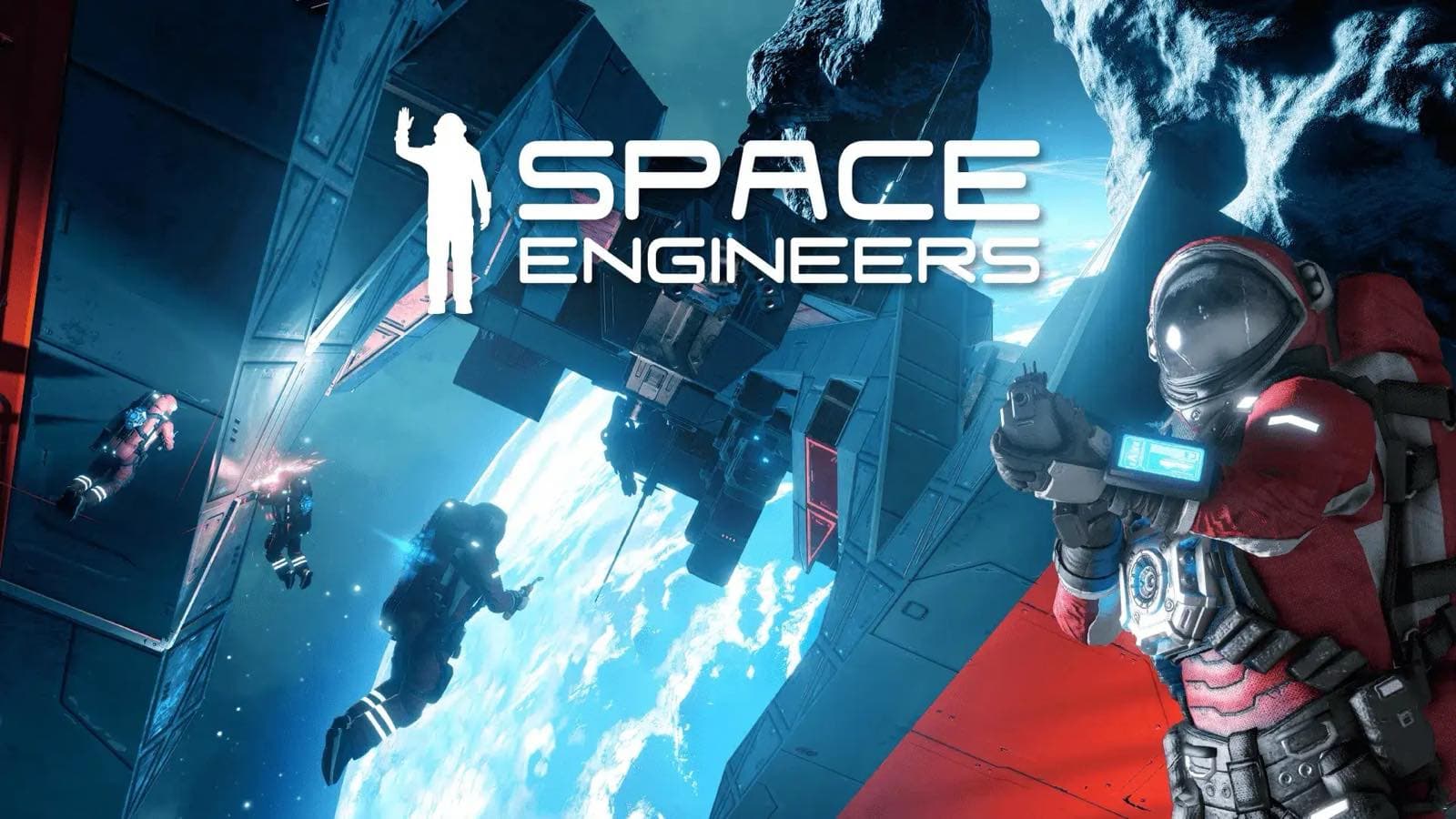
Space Engineers is a sandbox building game by Keen Software House, set in space and on planets. You design, build, and pilot ships, stations, and rovers block by block, using real-ish physics for mass, thrust, and gravity. If it looks like it should fly, it has to actually be built to fly.
There is no fixed story. You set the goal: survive on a hostile planet, mine an asteroid field, or engineer a capital ship from scrap. The depth is enormous, but the first steps are very approachable once you understand a few core systems.
Choosing a Start
When you create a world, two early choices matter most:
- Creative vs Survival. Creative gives you unlimited resources and instant building, perfect for learning controls. Survival makes you mine and craft everything. Start in Creative for an hour to learn the blocks, then switch to Survival for the real game.
- Planet vs Space start. A planet start (like Earth-like) teaches gravity, oxygen, and atmospheric thrusters. A space start is harder but simpler in some ways. For your first Survival run, a planet start is the gentler path.
Tip: Spend your first session in Creative just placing and deleting blocks. Learning the build menu without resource pressure saves a lot of frustration later.
Your First Hour in Survival
You start with a basic suit, a hand drill, a grinder, and a welder. Your goals in order:
- Mine ore with your hand drill (iron and silicon are everywhere near the start)
- Refine ore into ingots
- Assemble ingots into components
- Build a small grid with a power source and a survival kit or basic refinery
The Three Hand Tools
| Tool | What It Does |
|---|---|
| Hand Drill | Mines ore from terrain and asteroids |
| Grinder | Disassembles blocks back into parts |
| Welder | Builds and repairs blocks |
Tip: The grinder is your best friend in an emergency. Out of materials? Grind down a wreck or a spare block and you get the components back.
The Production Chain
This is the loop that powers everything in Space Engineers:
- Refinery turns raw ore into ingots
- Assembler turns ingots into components (steel plates, motors, computers)
- Welder or build menu turns components into blocks
A Survival Kit is the compact starter version that does basic refining, assembling, and respawning in one block. Build one early. It is your lifeline before you have a full refinery and assembler set up.
Power: Keep the Lights On
No power, no function. Your early options:
- Wind Turbines are cheap and reliable on planets with atmosphere. Place several in the open.
- Solar Panels work anywhere with sunlight but need to face the sun.
- Batteries store power and smooth out the gaps when wind or sun drops.
- Reactors burn uranium for serious output once you find the ore.
Tip: Always pair generation with batteries. A base that dies every night because the wind dropped is the classic beginner power failure.
Building Your First Ship
A ship is just a grid with the right blocks. The minimum to fly under control:
- A Cockpit to pilot from
- A Reactor or Battery for power
- Thrusters facing every direction you want to move (yes, all six, or you cannot stop and turn properly)
- A Gyroscope for rotation
- Cargo and a connector for hauling ore
Thrusters and Gravity
On a planet, you fight gravity. You need strong downward-facing thrusters (atmospheric or hydrogen) just to hang in the air. In space, gravity is gone, so smaller ion thrusters move you fine. Plan your thrust for where you are flying.
Tip: Build symmetrically and keep mass low. An overweight ship with weak thrusters will struggle to lift off a planet, and beginners almost always underestimate how much thrust gravity demands.
Oxygen and Survival Stats
Your engineer needs to breathe. Watch these:
- Oxygen. Your suit holds a limited supply. Refill at an O2/H2 Generator fed with ice. On airless worlds and in space, oxygen management is constant.
- Energy. Your suit's power runs your jetpack, lights, and tools. Recharge at any powered seat or kit.
- Hydrogen. Powers your jetpack thrust and hydrogen engines. Also made from ice.
Tip: Keep a stock of ice at your base. It is the single resource that keeps both your lungs and your jetpack working.
Multiplayer: Engineering Together
Space Engineers shines in co-op, and a dedicated server keeps your shared build persistent so the world is there whenever your group logs in. Multiplayer changes the scale of what you can attempt:
- Shared grids: build the same ship or station together in real time
- Specialize: one player mines, another refines, another designs and welds
- Ambitious projects: capital ships and large stations are far faster with a crew
Coordination Tips
- Agree on a build grid size (small vs large blocks) before starting a shared project
- Centralize storage with a shared cargo container and conveyor network
- Label your ships with name blocks so nobody grinds the wrong one
- Keep a shared ice and uranium stockpile so power and oxygen never run dry
Common Beginner Mistakes
- Forgetting reverse thrusters. Thrust in one direction only means you can speed up but not slow down. Build thrusters facing every direction.
- Underpowering for gravity. Lifting off a planet needs far more thrust than moving in space. Test before you load up with cargo.
- Ignoring oxygen and ice. Running out of either strands you. Always keep ice refining at base.
- No batteries. Generation without storage means blackouts. Pair them.
- Building too big too soon. A small, working miner ship beats a half-finished cruiser you cannot power.
- Skipping Creative practice. An hour in Creative learning blocks and thrust saves many wrecked Survival ships.
What's Next?
Once your first ship flies and your base has steady power:
- Build a dedicated mining ship with a drill array and large cargo
- Set up a full refinery and assembler line so you stop hand-refining
- Explore asteroids and other planets for rare ores like uranium and platinum
- Read our Project Zomboid server guide for another co-op survival setup
If you enjoy open-ended building, our Satisfactory beginner's guide and Valheim base building guide are strong next reads.
Space Engineers rewards engineers who plan. Start small, test your thrust, and your first working ship will feel earned.