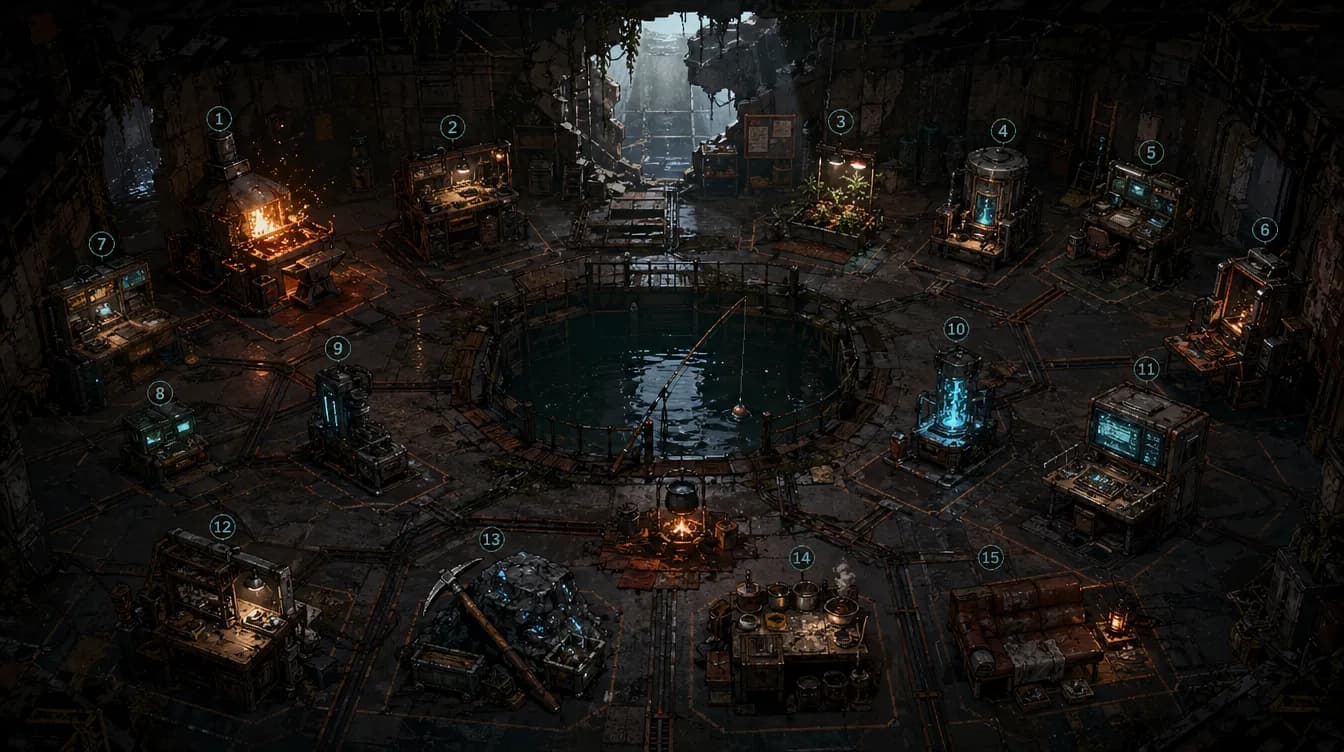

Melvor Idle has owned the RuneScape-flavored idle RPG niche since 2019. Signal Decay is the new entry in the same lane, with a sci-fi setting, an offline-first architecture, and programmable combat. Here is how they line up.
Setting
Melvor Idle. Browser-based fantasy. Goblins, dragons, gods, the standard RuneScape vocabulary.
Signal Decay. Sci-fi survival. Humanity engineered as a weapon by the Architects, sent forward on a 50,000-year timer, crash-landed on a contaminated planet. Every system ties back to "Signal" as a corrupting force. Tone is bleak-but-hopeful. UI is monospace, military-terminal, no gloss.
If you want taverns and wizards, Melvor. If you want relay towers and Codex entries, Signal Decay.
Platform
| Melvor Idle | Signal Decay | |
|---|---|---|
| Browser | Yes | Coming |
| iOS | Yes | Yes |
| Android | Yes | Yes |
| Offline play | Capped catch-up on reopen | True offline simulation, 12-hour cap |
| Backend | Cloud save | Supabase JSONB blob, optimistic locking, 5-min background flush |
Melvor's offline progression is a delta calculated on return. Signal Decay runs the actual simulation locally and reconciles when you come back online. Same outcome on paper, different behavior on flaky connections.
Skills
Melvor Idle. Around 22 skills counting expansions. Combat plus gathering plus artisan, modeled on OSRS.
Signal Decay. 15 lifeskills at max level 99 each:
- 5 gathering: Mining, BioHarvest, Signal Tapping, Woodcutting, Fishing
- 1 passive: Signal Arrays (the Farming slot, multi-channel relay towers)
- 8 crafting: Smelting, Forging, Synthesis, Signal Etching, Gem Resonance, Pyrecraft, Cooking, Fabrication
- 1 combat-side: Signal Runes
Tighter list, denser interaction between skills. Time-to-99 lands around 346 hours, comparable to Melvor's grind depth.
Combat
Melvor Idle. Tick-based. Equip a loadout, pick a target, watch numbers. Mastery deepens over time. Combat triangle of melee, ranged, magic.
Signal Decay. Seven OSRS-style combat skills leveled independently through attack-style XP routing: Attack, Strength, Fortitude, Ranged, Signal, Speed, Protocol. Three combat families:
- Melee with sword, axe, blade
- Ranged with bow and crossbow, stackable ammo
- Signal Magic with staff and rune-cost spells
Foreground combat is turn-by-turn with HP and XP committing per turn so the HUD updates live. Background combat is pure simulation against the same math.
The differentiator: Combat Protocols. Programmable rule automation. Switch ammo at HP thresholds, rotate spells by enemy type, eat at percentages, retreat on conditions. A separate Protocol Buffs combat skill levels through use. Two distinct systems players mix.
Melvor has combat options. Signal Decay lets you write them.
Crafting and Tiers
Melvor Idle. Bronze through ancient, level-gated recipes per skill, mastery bonuses on top.
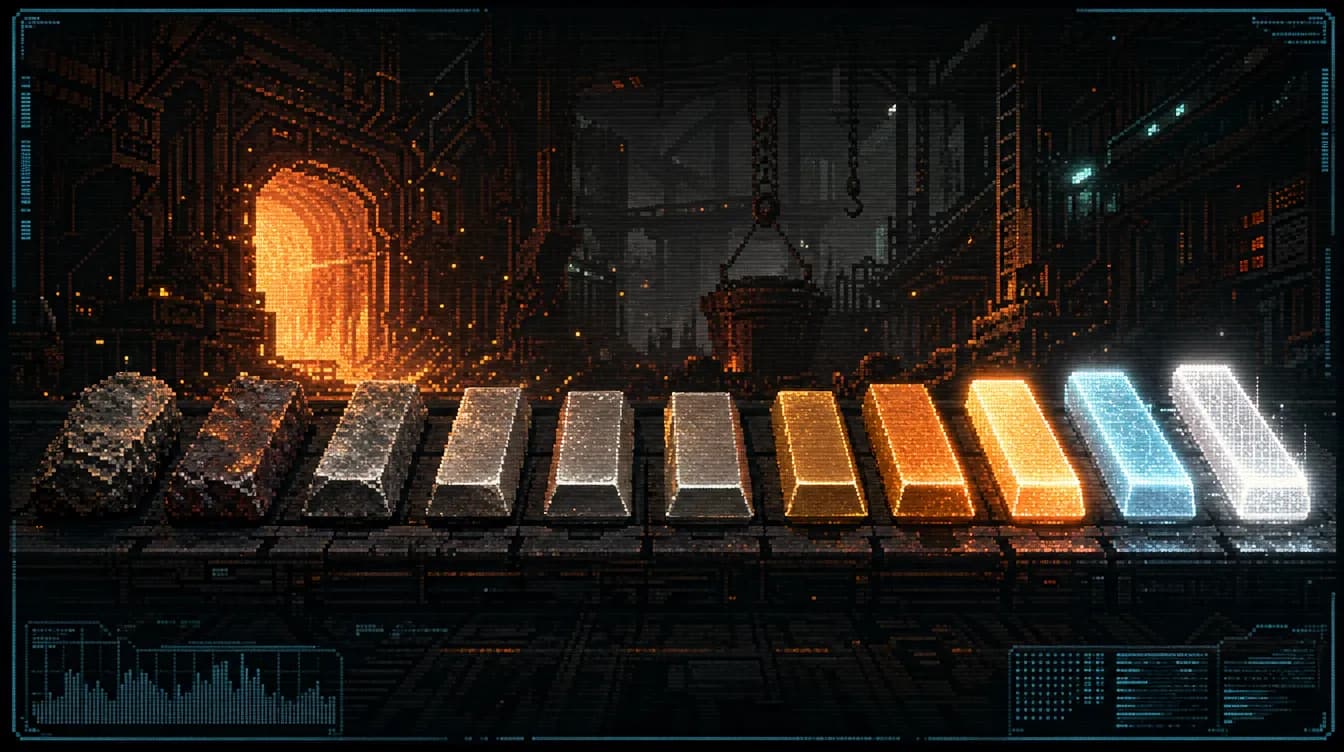
Signal Decay. 10 resource tiers across 6 resource types.
- T1 through T8 feed equipment crafting
- T9 and T10 are reserved for consumables, gems, and masterworks
Tool tier across four tool types modifies gathering success and yield. The crafting graph is wider per tier than Melvor's linear bronze-to-rune ladder.
Gems and Jewelry
Melvor Idle. Gems exist as gathering output and upgrade material.
Signal Decay. 5 gem types times 8 tiers, minor through transcendent. Two paths:
- Consume for temporary buffs
- Forge into permanent jewelry through Gem Resonance, 80 craftable rings and amulets
A full economy on top of the crafting backbone, not a side bucket.
Loot Philosophy
Melvor Idle. Rare drops, dungeon-exclusive items, tiered chests.
Signal Decay. Legendaries never drop from regular monsters or shops. Three sources only:
- Boss kills at 5%
- Nat-20 rolls on crates
- Tower milestone rewards
Fewer drops, each one worth keeping.
Bosses and World
Melvor Idle. Dungeons and slayer areas with boss fights at the end of gated runs.
Signal Decay. Wilderness exploration on grid-based zones. Monster spawns and gathering nodes scale to skill level. Bosses are multi-phase, summoned with fragments, drop exclusive legendaries with passive procs. Codex covers factions, bestiary, technology, chronicles. Survival Guide ships 51 mechanics entries across 6 categories.
Roadmap Differences
Melvor expansions have moved toward more skills, more bosses, more tiers. Signal Decay's near-term roadmap:
- Equipment set bonuses, two-piece faction synergies
- Boss-exclusive proc weapons with always-on passives
- Protocol Mastery Pool, per-skill XP pool spent on permanent passives, the Melvor Mastery analog
- Browser build
The Mastery Pool is the closest direct comparison. Same idea, different name, layered on top of the Protocols system.
Which One
Pick Melvor Idle if you want the genre incumbent, the deepest content library, and high-fantasy framing. It is the safer recommendation for a player who knows they like idle RPGs and wants 1,000+ hours of validated content.
Pick Signal Decay if you want offline-first behavior on mobile, programmable combat, sci-fi setting, and a tighter 15-skill loop with a 10-tier crafting backbone. It is the newer game, smaller content surface today, faster iteration cycle.
They are not mutually exclusive. Both run on phones. Both respect your time when the app is closed. The grind is the point in either.