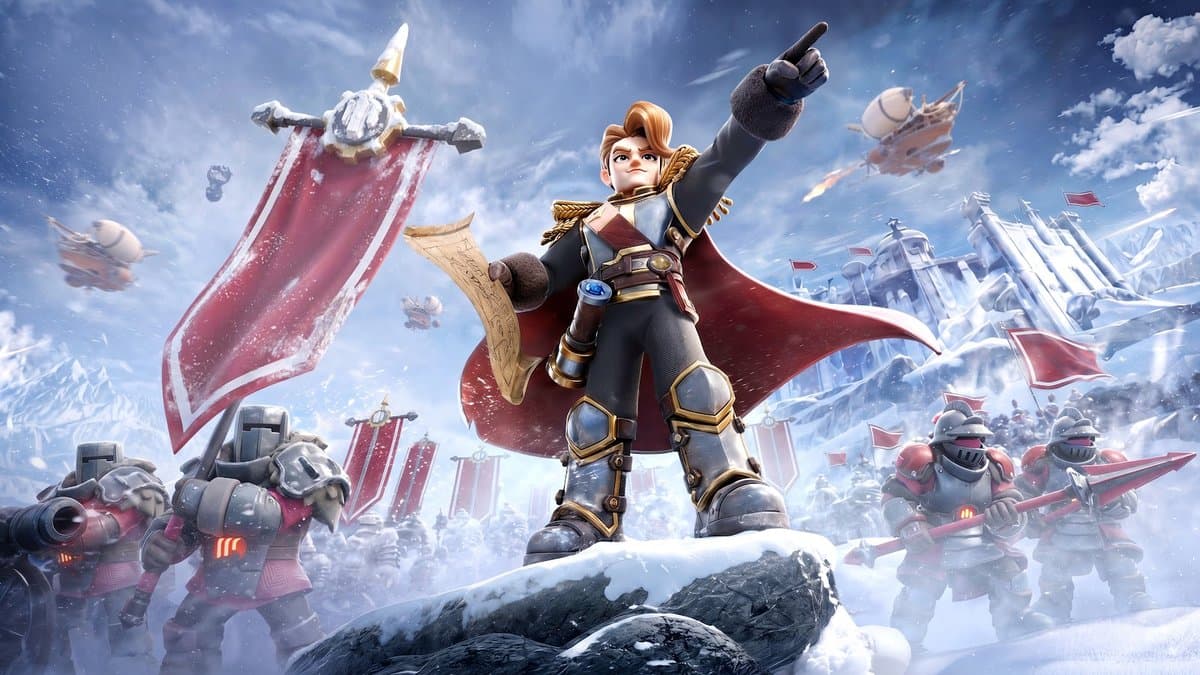
A lineup of three well-built heroes with the right roles will beat a bench of ten half-invested ones every time, and Whiteout Survival is designed to make sure of it. The game releases a fresh generation of heroes on a steady drumbeat, each stronger than the last, and it is very easy to burn your gems and materials chasing every reveal until nothing is actually finished. The players winning arena and holding the front line in State events are not the ones with the most heroes. They are the ones who understood formation before they understood the tier list.
Start with troop types, not hero names
Every hero belongs to one of three troop types, and those types are a rock-paper-scissors triangle that decides fights before individual stats matter:
- Infantry. Your front line and your wall. High defense and health, they soak damage and hold the formation together.
- Lancers. The middle. Mobile and aggressive, they punch into the enemy and counter one side of the triangle.
- Marksmen. The back line and your damage. Fragile but devastating, they melt the enemy while the Infantry keeps them alive.
A march is led by up to three heroes, and the golden rule is that your lead heroes should match the troop types you actually field. Stacking three Marksman heroes onto an Infantry-heavy army wastes most of their skills, because a hero's biggest bonuses apply to their own troop type. Build the army, then lead it with heroes who buff it.
The front-mid-back framework
Once you are matching hero to troop type, the winning lineup is almost always one of each role working together:
- A front-line anchor (Infantry). Something that survives, taunts, or shields so your damage stays alive.
- A disruptor or hybrid (Lancer). Damage and pressure that breaks the enemy formation open.
- A main damage dealer (Marksman). The unit that actually deletes the enemy army, protected by the other two.
This is why "which hero is best" is the wrong first question. A stellar Marksman with no front line dies before it fires. Synergy is the multiplier; a balanced trio of solid heroes outperforms one whale-tier carry propped up by two mismatches. When you read our Whiteout Survival tier list, read it through this lens: you are filling three roles, not collecting the highest numbers.
Exploration skills versus expedition skills
Heroes carry two kinds of skills, and confusing them leads to leveling the wrong hero for the wrong job:
- Exploration skills matter in the campaign-style Exploration mode, a stage-by-stage PvE progression. Great here does not always mean great in real combat.
- Expedition skills are the ones that fire in actual battles: rallies, garrisons, arena, and State-versus-State war. These are the skills that decide competitive performance.
When you evaluate a hero for your main march, the expedition skills are what count. A hero who is a monster in Exploration but brings little to real fights is a fine early crutch and a poor long-term investment.
Generations and the power-creep treadmill
Whiteout Survival adds hero generations on a schedule, and each new generation tends to outclass the ones before it. That is by design, and fighting it head-on is how free-to-play and low-spender accounts go broke. Two habits keep you sane:
- Do not fully invest in an old-generation hero the week a new generation is about to drop unless it fills a role you genuinely lack right now.
- Understand that heroes have a shelf life for the main march but a long tail as support: an aging Mythic that no longer leads your army can still be a superb rally joiner or garrison filler for years.
That distinction, main-march carry versus support joiner, is the key to not wasting resources, and it is the same instinct that drives a lot of gacha spending psychology across the genre (worth a read: our piece on dupe and vertical-investment FOMO).
Rally leaders, rally joiners, and garrison heroes
Not every strong hero needs to lead. Three distinct jobs share your roster:
- Rally leaders set the tone of an attack; their expedition skills buff the whole rally.
- Rally joiners contribute a passive bonus when they join someone else's rally, so a hero with a strong joiner skill earns their keep without top-tier gear.
- Garrison heroes defend, and a good defensive lineup can turn away an attacker who outnumbers you on paper.
This is why "epic" (purple) heroes are not dead weight even deep into the game. Well-known early epics like Molly, Jasser, Jessie, and Patrick keep value as joiners and event heroes long after they leave your primary march, precisely because a joiner does not need the same investment a carry does.
A spending order that survives every new hero
Resources are finite, heroes are not, so a priority list is your best defense against the treadmill:
- Finish one complete march first. One Infantry, one Lancer, one Marksman, all leveled, skilled, and geared, before you touch a fourth hero. A whole trio beats three half-heroes.
- Prioritize the main-march Marksman for damage investment, since your back-line carry usually contributes the most to a fight's outcome.
- Keep your front-line Infantry survivable, because a dead front line means a dead back line.
- Feed leftover materials into proven joiners, not into the newest shiny you have not built a role for.
- Bank for the generation that fills your weakest role, rather than pulling on every banner. A new hero you have no formation slot for is a worse buy than finishing the trio you already run.
For the wider progression that gears these heroes (Chief Gear, hero development, and the pace of a healthy account), the beginner progression guide lays out the full roadmap, and the Gen 9 heroes breakdown shows how a fresh generation slots into an existing march.
The Whiteout Survival version, briefly
Match heroes to the troop types you field. Run one of each role rather than three of the same. Judge main-march heroes by their expedition skills, not their Exploration highlight reel. And treat generations as a reason to specialize, not to spread thin: finish a trio, keep your old carries as joiners, and save for the hero that fixes your weakest slot.
Meta placings shift with every new generation, so keep the Whiteout Survival tier list open for the current best-in-role picks, grab the latest redeem codes for free resources toward your first complete march, and use the Whiteout Survival hub to track which generation is worth saving for next. Build the formation first and the tier list stops being a shopping list you can never finish.