The Short Answer
Project Zomboid kills you for the same three reasons almost every time: you got seen, you got surrounded, or you got sloppy about food, sleep, and infection. Build 42 adds a much deeper crafting and production layer on top of that, but the survival fundamentals are unchanged. Survive your first week by playing quiet and boring: move slowly, fight one zombie at a time or not at all, secure water and food before you run out, sleep somewhere safe, and never get bitten. Everything in this guide is a variation on those rules. This game is a marathon, and the players who live longest are the ones who are willing to be patient to the point of tedium.
The one rule that matters most: a bite is a death sentence. Roughly speaking, bites almost always mean the infection that kills you. Scratches and lacerations carry a lower but real chance. The whole game is built around never letting a zombie's mouth reach you.
Character Creation: Traits That Keep You Alive
Your build starts before you spawn. Occupations give a free bonus, and traits are a points economy: positive traits cost points, negative traits give points back. New players should not min-max into a glass cannon. Take a survivable, well-rounded build.
| Priority | Good positive traits | Why |
|---|---|---|
| Combat safety | Athletic or Strong | Stamina and melee damage keep you alive in a swing |
| Sustain | Fast Learner, Wakeful | Levels come faster; you sleep less, loot more |
| Economy | Take negatives you can play around | Fund the traits that matter |
Reasonable negative traits for beginners include ones that only affect long-term comfort rather than immediate lethality, such as slow metabolism-style traits or hobby-skill penalties you were not going to use. Avoid anything that cripples vision, hearing, or movement speed. Deaf, Short Sighted, and slow-movement traits get new players killed because Project Zomboid is a game of information and spacing.
For occupation, anything with a combat or fitness lean is forgiving early. The point is not the perfect build. It is a build that survives its own mistakes.
Surviving the First Night
Your first in-game day is the most dangerous, because you have nothing. Here is the opening sequence that works:
- Loot your spawn house quietly. Grab a bag, a weapon (a kitchen knife or any blunt object beats bare hands), food, water containers, a sheet or bag for a rope, and any painkillers or bandages.
- Close and cover windows. Zombies are drawn to what they can see and hear. Put sheets over ground-floor windows so wandering zombies do not spot you inside.
- Do not turn on lights or the TV at night. Light and sound are how you die in your sleep.
- Find water before the water shuts off. Early in a save, taps work. Fill every container you can, because the water supply will eventually be cut and you will need a rain collector or a well.
- Sleep behind a locked door, upstairs if possible. Exhaustion tanks your combat performance. Sleep when the "tired" moodle appears, not when you feel like it.
Reading Your Moodles
Moodles are the icons in the top-right corner, and they are your dashboard. Ignoring them is the slow way to die. Learn the critical ones:
- Hungry / Thirsty: eat and drink before they turn red. Dehydration and starvation both eventually kill.
- Tired: sleep, or your accuracy and stamina collapse.
- Panic: appears near zombies. High panic wrecks your aim. Beta blockers reduce it, and experience naturally lowers your baseline panic over time.
- Exhausted / Heavy Load: carrying too much slows you and drains stamina. Drop loot before you drop your guard.
- Sick / Nauseous: could be food poisoning (bad food, cooking mistakes) or the infection. Track when it started and what you did.
- Bored / Unhappy: long-term morale hits that reduce efficiency. Read books, watch pre-shutdown TV, and keep some comfort food.
The skill is not reacting to red moodles. It is acting on the first faint moodle so you never see red.
Combat: Win by Not Fighting
Project Zomboid combat is deliberately clumsy, and that is the point. You are not an action hero. The rules:
- Fight one at a time. Use doorways, fences, and corners to funnel a group into a single-file line you can handle. A crowd in the open is death.
- Shove, then swing. Pushing a zombie creates space and a stagger window. Panic-swinging into a group whiffs and gets you grabbed.
- Blunt weapons for durability, blades for speed. Early on, whatever you have. A found weapon you can maintain beats a great weapon that breaks.
- Guns are a last resort early. Gunfire is loud and draws every zombie in earshot. Firearms are a mid-game tool, not a starter kit.
- Sneak. Crouch-walking lowers your visibility and noise. A survivor who moves slowly and stays hidden fights a fraction of the zombies a runner does.
If you are ever unsure whether to fight or flee, flee. There is no reward for clearing an area you did not need to clear.
Picking and Fortifying a Base
Your first "base" is just wherever you survived the night. Your real base is a deliberate choice. Look for:
- Away from town centers. Fewer zombies wander into low-density residential and rural areas.
- A water and food angle. Proximity to a spot you can farm, or room for rain collectors, matters once utilities shut off.
- Defensible sightlines. A house you can barricade and see out of beats a mansion you cannot cover.
- Storage and a workbench. Build 42's deeper crafting rewards a base with room to set up production.
Fortify gradually: barricade ground-floor windows and doors with planks and nails, keep one controlled entrance, and consider a second-floor safe room. Do not over-fortify early. A sledgehammer, a hammer, planks, and nails will do more for your survival than any weapon.
Build 42's Deeper Crafting and Self-Sufficiency
Build 42 is defined by its overhauled, more physical crafting and production chains, and this is where a survivor transitions from scavenger to settler. The mid-game loop looks like this:
- Secure renewable water and food. Rain collectors and farming end your dependence on looted cans.
- Farm and preserve. Grow crops, and use cooking and preservation to bank calories against lean weeks.
- Build production chains. Build 42's crafting depth means you can process raw materials into tools, furniture, and gear at your base rather than relying on finding them.
- Expand the map downward. New multi-level interiors and basements in Build 42 give you more to loot and more to defend, so scout carefully.
The mindset shift is the real milestone: early Project Zomboid is about not dying, and mid-game Project Zomboid is about building a life you would be sad to lose. That is when the game gets its hooks in.
Common Beginner Mistakes
- Looting greedily. Overweight survivors move slowly and get caught. Take what you need, come back for the rest.
- Sprinting everywhere. Sprinting is loud, tiring, and gets you grabbed around blind corners. Walk.
- Ignoring your health tab. Track wounds, especially anything that could be a scratch or bite. Clean and bandage promptly.
- Fighting at night. Visibility is terrible after dark. Do your dangerous work in daylight.
- Getting attached too fast. Especially on the unstable branch, your world is fragile. Enjoy the run, not the trophy.
Where to Go Next
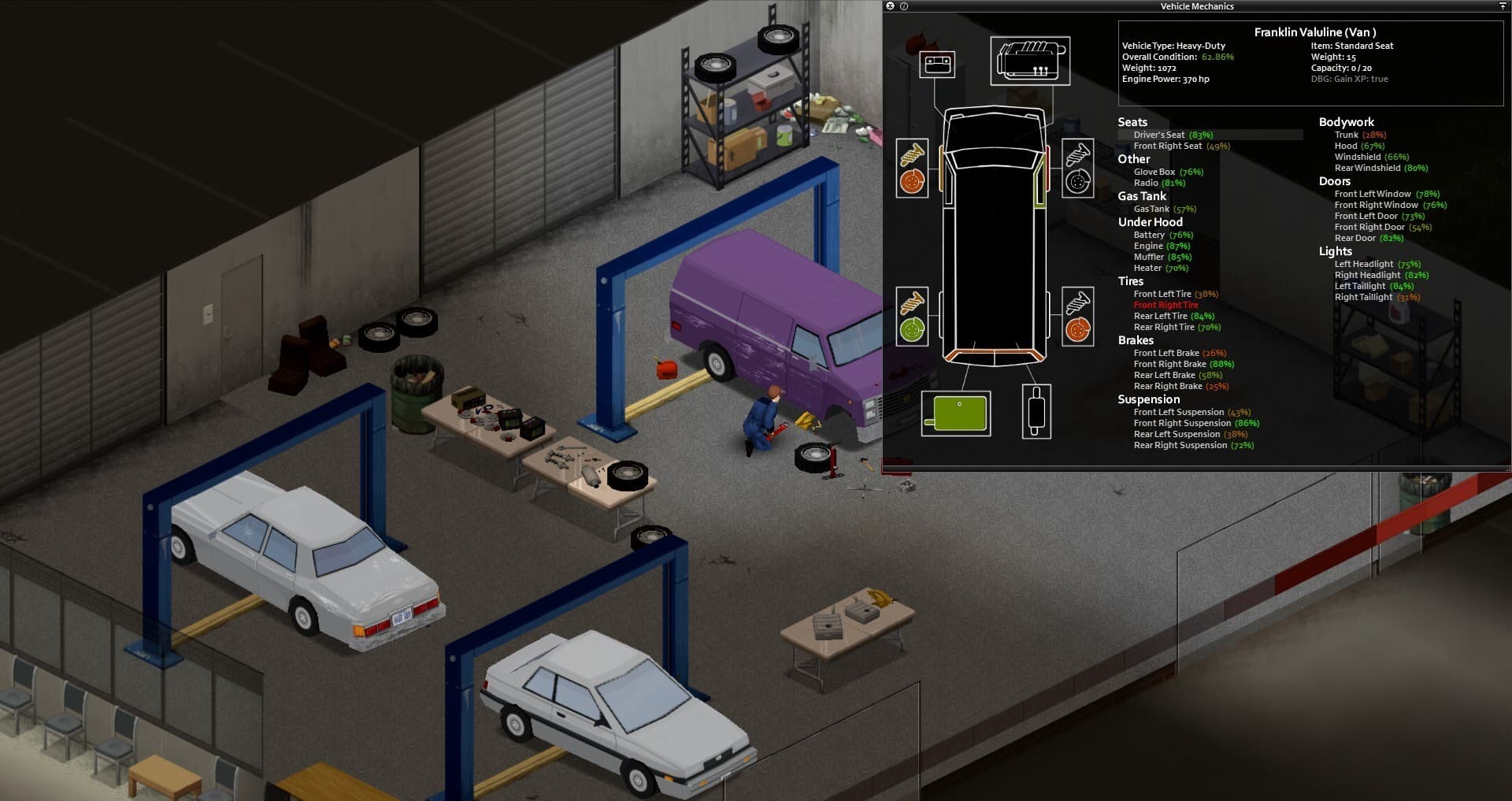
Once you can reliably survive a week, the next steps are cars, long-distance looting runs, and either a fortified solo homestead or a group base. If you want to play with friends, note that Build 42 multiplayer is still an unstable-branch stress test, so read our Build 42 multiplayer status before you commit a group, and our Project Zomboid server guide for hosting. For the bigger picture on the update, see our Build 42 review.
FAQ
How do I stop dying on day two? Play quiet: cover windows, sleep behind locked doors, fight one zombie at a time, and never get overweight or exhausted near a horde.
Is a bite always fatal? Effectively yes. Bites almost always transmit the fatal infection. Scratches and lacerations carry a lower chance. Avoid all contact.
What should I do first when I spawn? Loot your house, grab water and a weapon, cover the windows, and secure a safe place to sleep before nightfall.
What makes Build 42 different for survival? A much deeper crafting and production system, basements and multi-level interiors, and expanded farming and animal husbandry that make long-term self-sufficiency the real goal.