There is a specific kind of gaming folklore we tell over and over, and it always has the same shape. A game arrives to ridicule. Refund threads, review bombs, the developer's name turning into a punchline. Everyone agrees it is a disaster, moves on, and forgets. And then, sometimes years later, a single word starts showing up under every video about it: "actually." As in, "actually, it's really good now." That word is the sound of a redemption patch landing.
The launch is the first draft, not the verdict
For most of gaming history, a game was whatever it was on day one. You bought the box, you got the game, and if it was broken it stayed broken. Live service quietly demolished that assumption. A game is now a thing that keeps arriving, patch after patch, for years. Which means a bad launch is no longer a death sentence. It is a rough first draft that the studio, if it survives the initial beating, gets to revise in public.
That changes the emotional physics of a launch. When a game stumbles now, a portion of the audience does not write it off. They bookmark it. They wait to see whether the studio is the kind that runs or the kind that digs in. The redemption patch is what they are waiting for.
The archetypes everyone knows
The comeback story has a few patron saints, and they are famous precisely because the fall was so public.
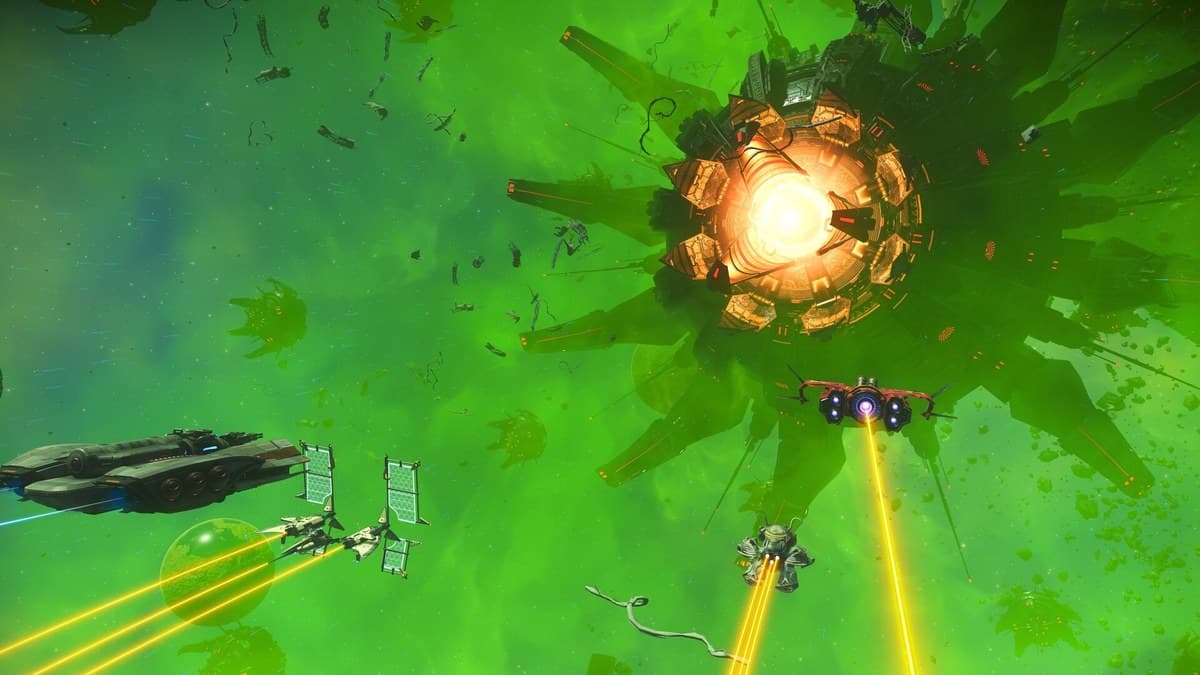
No Man's Sky promised a universe and shipped, in 2016, something that felt hollow next to the hype. The studio went nearly silent, then answered not with an apology tour but with a years-long march of free updates that slowly added the base building, multiplayer, and exploration depth the original had gestured at. The game people describe today is barely the game people refunded. It became the template: heads down, ship substance, let the game argue on its own behalf.
Final Fantasy XIV is the more dramatic version, because the fix was total. The original 2010 release was so troubled that the studio did the almost unthinkable: it took the game offline, blew it up in the story canon by literally dropping a moon on the world, and relaunched it as A Realm Reborn. A failure became one of the most beloved MMOs running. You cannot patch harder than deleting the game and building a better one on the crater.
Cyberpunk 2077 launched in 2020 into a storm of broken promises and last-gen consoles that could barely run it, and spent years being the example people reached for when they wanted to say "do not preorder." Its 2.0-era overhaul, alongside an expansion that reviewed like a different studio made it, dragged it back into the conversation as a game worth playing rather than a cautionary tale.
You can trace the same arc through live-service and gacha titles too. A rocky launch, a wave of "this is dead on arrival" takes, and then a version update that quietly fixes the combat feel, the endgame, or the monetization, and the sentiment flips. In the gacha space especially, where the game is expected to change every patch anyway, the redemption arc has become almost a genre convention. Studios that listen fast can turn a shaky first month into years of goodwill.
Why the redemption patch works on us
Here is the uncomfortable part: a redeemed game often gets more love than a game that was simply good the whole time. That is not rational, and it is very human.
- We reward the arc, not the state. A game that was always fine is a flat line. A game that was terrible and became great is a story, and we are suckers for a story. The redemption gives us a hero (the persistent studio), a villain (the botched launch), and a third act. Steady competence has none of that.
- The low bar flatters the recovery. Once a game's reputation hits the floor, every improvement lands as a pleasant surprise. The same feature that would have been "expected at launch" becomes "wow, they really turned it around" a year later. The disaster becomes an asset, because it sets expectations so low that meeting them feels like triumph.
- We want to believe effort is repaid. The redemption patch is proof that sticking with something can work out, that the studio that kept grinding on a game everyone mocked was right to. That is a comforting thing to believe, so we amplify the stories that confirm it.
- Forgiveness is cheap and satisfying. Coming back to a game and finding it good lets us be generous. "I'm glad I gave it another shot" feels better than "I was right to hate it." We like forgiving, and the redemption patch hands us the excuse.
The shadow side
Not every "it's good now" is earned, and the culture around redemption has a couple of failure modes worth naming.
The first is that a genuine comeback story becomes cover for shipping unfinished games on purpose. If the audience has been trained to believe any launch can be patched into greatness, the pressure to launch finished softens. "We'll fix it later" is a promise that the redemption archetype makes easier to swallow, and most games that ship broken never get their A Realm Reborn. For every legendary comeback there is a graveyard of titles that got the bad launch and no third act, because the studio ran out of money or nerve first.
The second is that redemption discourse can be as hollow as the hype it replaced. "It's good now" gets repeated by people who have not touched the game since launch, the same way "it's a disaster" got repeated by people who never played it at all. The pendulum swings from unfair scorn to unfair praise without ever passing through "let's actually check."
How to read a comeback honestly
If you are eyeing a game that is supposedly redeemed, a few habits keep you grounded:
- Ask what specifically changed, not just whether the vibe flipped. A real redemption patch has receipts: reworked systems, new content, fixed monetization. "The community is nicer now" is not a redemption.
- Check a recent verdict, not a launch one. Old reviews describe a game that no longer exists, in both directions. The version in front of you is the only one that counts.
- Separate the story from the software. The comeback narrative is genuinely moving, and it is also a reason to be more careful, not less, because a good story makes us lower our guard.
The redemption patch is one of the best things live service gave us. It means a studio that cares can be wrong on Tuesday and right by next year, and it means a game you wrote off might be worth a second look. Just remember that the arc is the seductive part, and the arc is exactly what you should be checking against the actual game.
If you want the flip side of this coin, the games that were good and then declined, read Your Main Has a Shelf Life on the quiet grief of power creep, or The Roadmap Trust Problem on what happens when a comeback is promised and slips. For more from the culture desk, browse the full HostedGG blog.