There is a lazy story about gacha games that refuses to die: that they are a machine built by men, for men, to sell pretty women one pull at a time. It was never fully true, and by 2026 it is not even close. Some of the most profitable banners in the genre's recent history have been men. Not male characters tolerated as filler, not the occasional exception, but genuine chart-topping, revenue-record husbando banners that publishers now plan their calendars around. The waifu business quietly became a business that sells everyone, and the change tells you more about the modern gacha audience than any dev interview.
The moment the chart flipped
For a long time, the conventional wisdom inside the industry treated male units as a hedge. You put one on a banner to keep a slice of the audience happy, but the money, everyone assumed, came from the women. Then the numbers stopped cooperating with the theory.
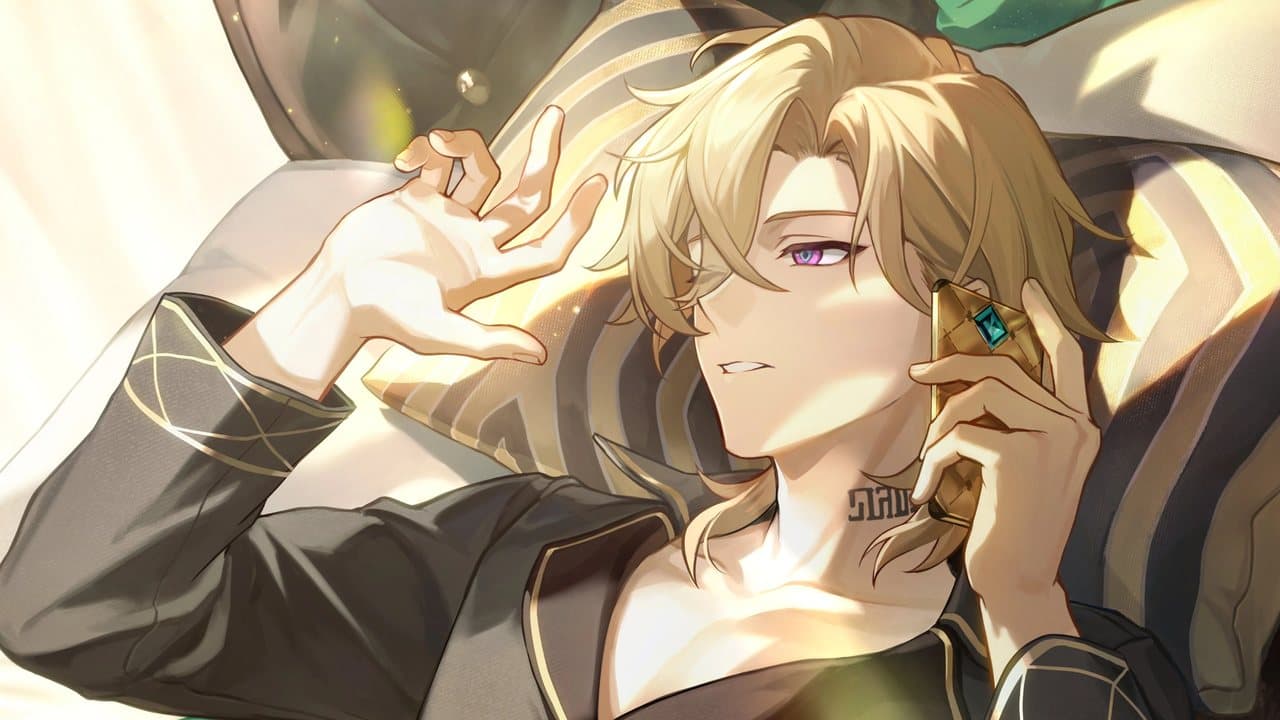
Across the big live-service titles, male limited units started posting some of the strongest banner performances on record. In HoYoverse's stable alone, characters like Zhongli, Neuvillette, and later Aventurine and Sunday did not merely sell; they set benchmarks. Other studios watched the same thing happen with their own men. The pattern was too consistent to be luck, and once it was clearly money on the table, the calculus changed for good.
This is the important part: publishers do not act on fan sentiment, they act on revenue. The husbando boom is real not because communities argued for it, but because the spending proved it. Once a male banner outperformed the waifu it was scheduled against, "male units are a hedge" stopped being a defensible position in a revenue meeting.
Who was actually paying
The obvious explanation is that gacha has a large, engaged female audience that the old story simply refused to count, and that is a big part of it. But it undersells what is happening. The husbando boom is powered by at least three overlapping groups, and only one of them fits the tidy demographic assumption.
- Players pulling for attraction, the direct mirror of the waifu collector, a group the industry spent years pretending was marginal.
- Players pulling for the character, drawn by writing, arcs, and voice performances, where a well-written man is just a must-pull regardless of who is playing.
- Meta players pulling for power, because a striking number of these chart-topping men also happened to be, mechanically, some of the best units in their games.
That last point matters more than the discourse admits. Several of the biggest husbando successes were not sold on looks alone; they were kit-defining support or damage units that meta-conscious players would have pulled if the character had been a cardboard box. When a character is both a fan favorite and a must-pull for the tier list, the banner does not have a ceiling. The husbando boom is partly a demographics story and partly the plain fact that studios got good at making men who are impossible to skip.
How banner design changed to chase it
You can see the industry's new understanding in how banners are built now.
- Male units get flagship slots, not consolation placements. Anniversary and version-headliner positions, once reserved almost exclusively for waifus, now regularly go to men.
- Story arcs are engineered around them. A character's writing, screen time, and cliffhanger placement are increasingly timed to land right before their banner, because a man players are emotionally invested in outsells a man they merely find handsome.
- The marketing widened. Key art, trailers, and merch lines stopped assuming a single audience and started speaking to the whole room.
None of this is charity. It is the same optimization engine that produced the 50/50, the pity systems, and the FOMO cycles we cover elsewhere, now pointed at a larger and more balanced audience than the genre used to admit it had.
The shipping and fandom multiplier
There is a second engine under the husbando boom that pure attraction does not capture: fandom economy. Male units generate an enormous amount of community output, and that output sells more copies of the character.
Ship art, fan comics, voice-actor followings, and the endless discourse around a popular man all function as unpaid, sincere marketing. A character who becomes a fandom fixation stays visible long after their banner ends, and that visibility feeds the reruns. Studios have noticed. The men who get the biggest pushes tend to be the ones with the most fan-fiction-shaped potential: layered backstories, charged relationships with other characters, and just enough unresolved tension to keep a subreddit busy for a year. This is the same collector-versus-meta tension that has always driven gacha, just finally acknowledging half the audience it used to ignore.
What it does and does not fix
It would be easy to frame this as a straightforward win, and in one sense it is: a genre that spent years condescending to a huge chunk of its own players is now building for them, and the games are more varied and better-written for it. Broadening who a game is for tends to make the game better for everyone.
But the husbando boom does not change the underlying machine, and pretending it does would be its own kind of copium. A husbando banner runs on the exact same pity math, the same limited-time pressure, and the same monetization as any waifu banner. The audience got wider; the incentives did not get gentler. A player pulled into overspending on a beloved man is in precisely the same spot as one overspending on a beloved woman. That is worth naming clearly, because it is easy to celebrate representation while ignoring that the representation is still, first and last, a product designed to be pulled for.
The takeaway
The husbando boom is the clearest sign that the old caricature of the gacha player is dead. These games are not a waifu business that occasionally sells a man. They are an attention business that finally figured out its audience was always bigger, more mixed, and more discerning than the marketing assumed, and rebuilt its banners accordingly. The men top the charts now for the same unglamorous reason the women did before them: someone ran the numbers, and the numbers said pull.
This is the gacha culture beat, and the community is where the good stories live. Got a banner, a fandom moment, or a piece of genre history we should cover? Pitch it to us. We write about these games with affection and clear eyes, and you can read how we hold that line in our editorial standards.